
Views: 288 Author: Magic Household Cleaning Publish Time: 2026-09-04 Origin: Site
Content Menu
● Why Laundry Scent Boosters Raise Environmental Questions
● The Main Environmental Impacts of Scent Beads
>> 1. Fragrance Chemistry and Aquatic Toxicity
>> 2. Biodegradability of Formula Components
>> 3. Packaging Waste and Refill Design
>> 4. Over-Dosing and Consumer Behavior
● Are Laundry Scent Boosters Worse Than Detergent?
● How to Choose More Sustainable Laundry Scent Beads
>> A Five-Step Buyer Checklist
● What Responsible Manufacturers Should Do
>> 1. Are laundry scent beads biodegradable?
>> 2. Do laundry scent boosters pollute waterways?
>> 3. Is fragrance-free always more environmentally friendly?
>> 4. What certifications should a laundry scent booster supplier understand?
>> 5. What makes laundry scent bead packaging more sustainable?
>> 6. How can private-label brands avoid greenwashing?
Laundry scent boosters are not automatically bad for the environment—but their impact depends heavily on the full formula, fragrance system, dosage, biodegradability, packaging, and manufacturing controls. For brands developing laundry scent beads, the most responsible approach is to evaluate environmental performance ingredient by ingredient rather than relying on broad claims such as "natural," "green," or "eco-friendly."
For private-label laundry brands, retailers, and importers, this distinction matters. Consumers increasingly want long-lasting fragrance without unnecessary waste, unclear chemical disclosure, or formulas that may create concerns for waterways and sensitive households. A well-designed scent-bead product can help meet that demand when it is built around transparent ingredient selection, validated biodegradability, appropriate fragrance screening, and lower-impact packaging.
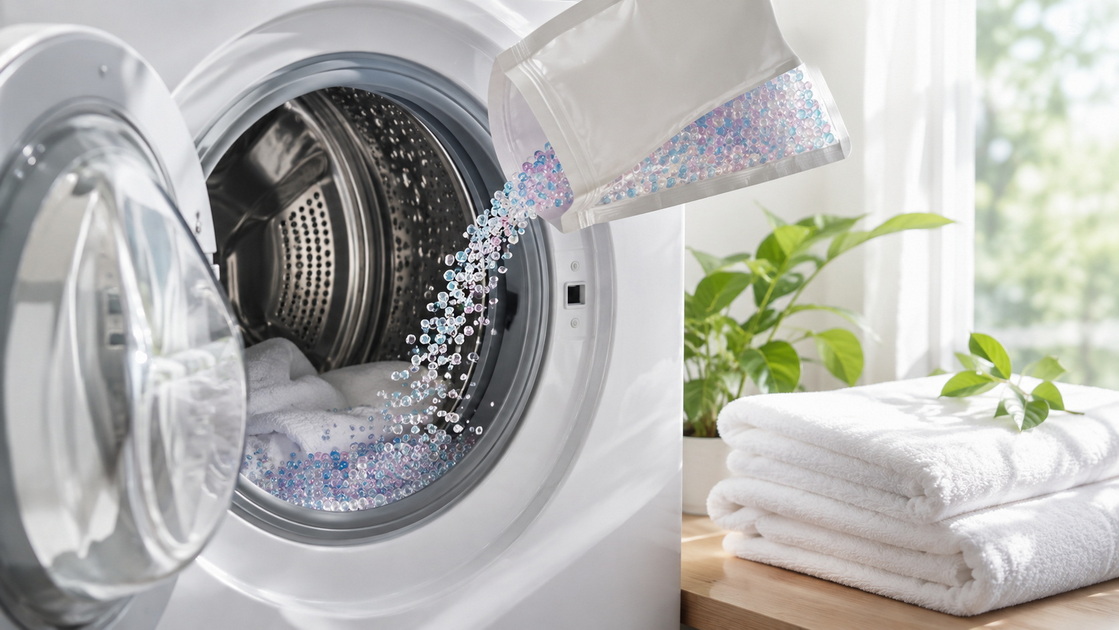
Laundry scent boosters—often sold as scent beads, fragrance beads, laundry perfume beads, or in-wash scent boosters—are designed to add fragrance during the wash cycle. Unlike detergent, their primary purpose is usually scent delivery rather than soil removal.
That makes them attractive to consumers who associate freshly washed textiles with comfort, cleanliness, and personal expression. But it also means buyers should examine the product's environmental profile closely. A fragrance-forward formula may contain multiple functional materials: fragrance components, solubilizers, stabilizers, carriers, colorants, and bead-forming ingredients.
The original question is therefore valid: can laundry scent boosters contribute to environmental harm? They can—particularly when formulas use poorly understood materials, persistent ingredients, excessive packaging, or unsupported environmental claims. However, responsible product development can reduce many of these risks.
The U.S. Environmental Protection Agency's Safer Choice program evaluates ingredients against human-health and environmental criteria. For direct-release products, it does not allow ingredients with aquatic-toxicity values below 10 mg/L, among other screening requirements.
For product developers, this means environmental responsibility should begin long before a label is printed. It should be integrated into fragrance selection, raw-material procurement, formula testing, packaging design, and supplier documentation.
Not all environmental concerns carry the same weight. A realistic evaluation should separate the potential impact of the formula from the impact of packaging and consumer use.
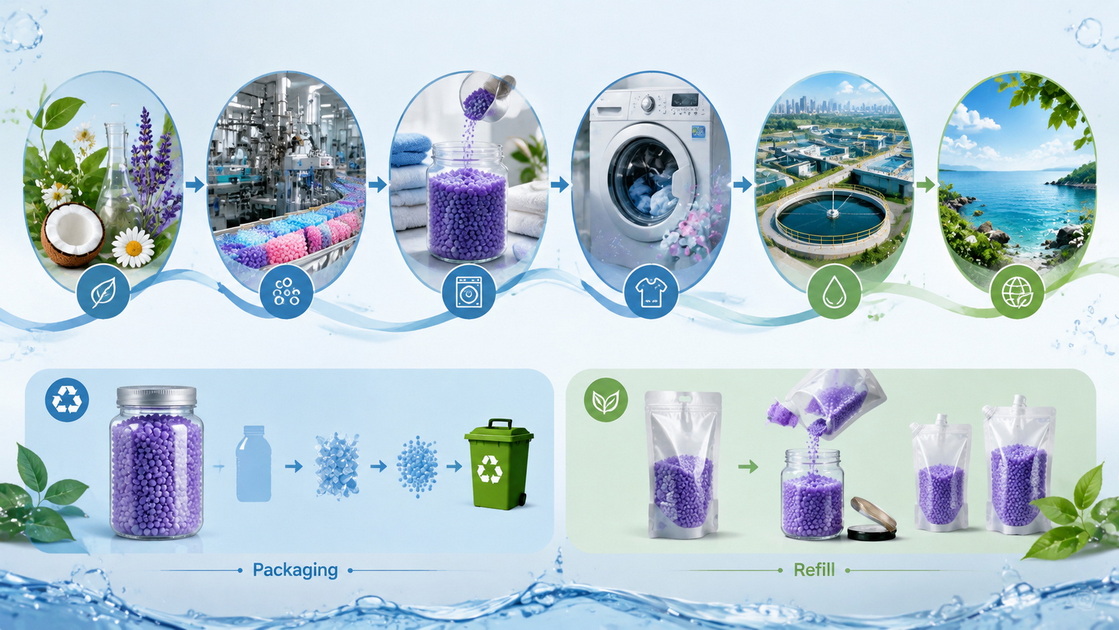
Fragrance is one of the most important factors in a laundry scent booster. It is also one of the most complex because a fragrance may contain many individual materials, often used at low concentrations.
Some fragrance materials can present concerns related to aquatic toxicity, persistence, bioaccumulation, or sensitization. This does not mean that every scented product is unsafe or environmentally harmful. It means brands should avoid treating "fragrance" as a black box.
A responsible development process should require fragrance suppliers to provide:
- Full regulatory documentation for the intended market
- IFRA compliance information where relevant
- Safety data sheets and allergen information
- Screening for persistent, bioaccumulative, and toxic substances
- Evidence supporting environmentally preferable fragrance choices
- A clear process for updating formulas when regulations change
EPA's fragrance criteria prohibit listed carcinogens, mutagens, reproductive or developmental toxicants, listed persistent/bioaccumulative/toxic compounds, and listed respiratory sensitizers in Safer Choice-certified product fragrances. It also requires disclosure of dermal sensitizers.
Practical implication: A brand should not simply ask, "Does this scent smell premium?" It should ask, "Can the fragrance supplier document environmental and safety screening for this fragrance system?"
"Biodegradable" is one of the most common claims in household cleaning. It is also one of the easiest claims to overuse.
A material may biodegrade under one set of laboratory conditions but behave differently in cold water, wastewater systems, septic systems, or natural environments. For that reason, a credible biodegradability claim should be tied to a recognized test method, the specific material tested, and the conditions of the test.
The OECD 301 test series is widely used to screen chemicals for ready biodegradability in aerobic aqueous conditions. Under these guidelines, the pass level is generally 60% degradation for respirometric methods or 70% dissolved organic carbon removal, achieved within a 10-day window during a 28-day test period.
For laundry scent bead manufacturers and brand owners, the right question is not simply whether one ingredient is biodegradable. It is whether the relevant organic ingredients in the finished formula or raw-material system have appropriate supporting evidence.
Ask suppliers to clarify:
- Which components have been tested
- Which OECD method was used
- Whether the test addresses the complete formula, carrier, or individual raw material
- Whether the result supports "readily biodegradable" or a more limited claim
- Whether any degradation products raise separate concerns
Even a thoughtfully formulated scent booster can create unnecessary environmental burden if it is sold in excessive, difficult-to-recycle packaging.
The best packaging choice depends on the product's moisture sensitivity, fragrance retention needs, local recycling infrastructure, and transportation requirements. There is no universal "sustainable" pack. A paper pouch with a non-recyclable barrier layer, for example, may not be more recyclable in practice than a lightweight mono-material plastic pouch.
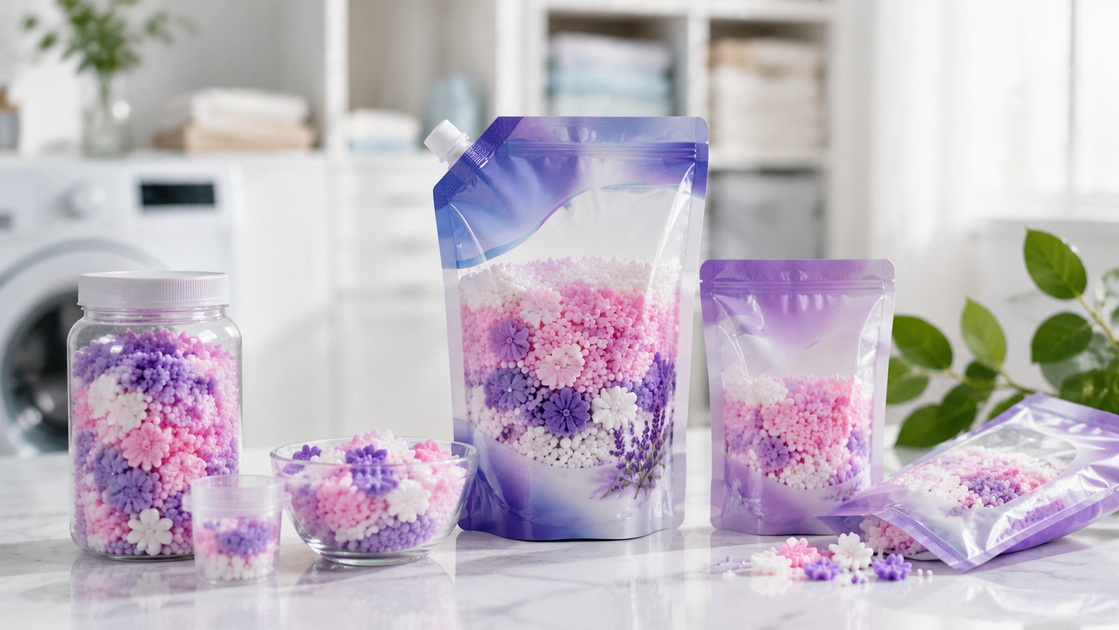
A better packaging strategy often includes:
| Packaging decision | Why it matters | Better procurement question |
|---|---|---|
| Lightweight packaging | Can reduce material use and transport weight | Can the pack be downgauged without reducing product protection? |
| Recycled content | May reduce demand for virgin plastic | What percentage is post-consumer recycled content, and is it verified? |
| Refill format | Can reduce packaging per use | Is the refill system convenient enough for repeat purchase? |
| Recyclable design | Improves end-of-life potential | Is the pack compatible with collection systems in the target market? |
| Accurate disposal instructions | Helps consumers act correctly | Are recycling instructions market-specific and easy to understand? |
EU Ecolabel criteria for cleaning products have historically emphasized issues including biodegradability, hazardous-substance restrictions, packaging, and lifecycle impact. The European Commission's supporting materials also specify that surfactants must be readily biodegradable aerobically and biodegradable anaerobically under the relevant criteria.
Dosage is an overlooked environmental lever. Consumers may add more beads than recommended because they expect stronger or longer-lasting fragrance. That can increase fragrance loading per wash, raise cost per use, and make the product appear less sustainable.
A good scent-bead product should make the correct dose easy to understand. This can include a measuring cap, a clear scoop, visual dosage marks, concise instructions, and a scent performance profile that works at the recommended amount.
Not necessarily. Laundry detergent and laundry scent boosters serve different functions, so their environmental impacts should not be compared only by product category.
Detergent is designed to remove soils and may include surfactants, enzymes, builders, polymers, preservatives, and other functional ingredients. Scent boosters are primarily designed for fragrance deposition. Both product types should be evaluated based on their actual formula, recommended dose, packaging, performance, and ingredient transparency.
The National Park Service notes that scented laundry products can emit volatile organic compounds and that the full environmental and health impacts of some laundry-product ingredients are not fully understood. It also points out that ingredient disclosure can be limited.
That uncertainty is exactly why brands should avoid absolute claims. Statements such as "zero impact," "chemical-free," or "completely harmless" are difficult to substantiate and may undermine consumer trust.
A stronger approach is specific and evidence-led:
- "Formulated without intentionally added microplastics," if supported by formula review
- "Packaging contains 50% post-consumer recycled plastic," if verified
- "Fragrance components screened against defined supplier criteria"
- "Dosage guidance designed to reduce unnecessary product use"
- "Raw materials assessed for biodegradability using recognized methods"
For consumers, retailers, and B2B buyers, the fastest way to separate meaningful sustainability work from marketing language is to use a supplier-evaluation checklist.
1. Request formula transparency.
Ask what categories of ingredients are used: fragrance, carrier, binder, colorant, stabilizer, and processing aids. A supplier may protect proprietary ratios, but it should still provide credible regulatory and safety documentation.
2. Verify environmental claims.
Ask whether "biodegradable," "eco-friendly," "plant-based," "plastic-free," or "non-toxic" claims are supported by test reports, specifications, certifications, or a clear internal substantiation file.
3. Evaluate fragrance controls.
Confirm whether the fragrance house follows applicable fragrance standards and whether the formula is screened for restricted or higher-concern substances in the destination market.
4. Check packaging options.
Compare jars, pouches, refill packs, recycled-content packaging, and shipping configurations. The lowest-material option is often a strong starting point, provided product stability remains reliable.
5. Review manufacturing capability.
Environmental positioning fails when batch consistency, fragrance retention, moisture control, filling accuracy, or export documentation is weak. Select a manufacturer that can support quality systems as well as product innovation.
For private-label projects, buyers should also ask for stability testing, compatibility checks with packaging, fragrance retention data, color migration evaluation, and sample validation under real washing conditions.
At Foshan Magic Crystal Technology Development Co., Ltd., laundry scent beads should be approached as both a consumer-experience product and a product-development responsibility. A supplier serving global brands must consider not only fragrance intensity and bead appearance, but also compliance readiness, supply-chain reliability, packaging flexibility, and claim substantiation.

With more than three self-owned factories, annual production capacity of approximately 30,000–40,000 tonnes, and OEM/ODM service experience for more than 300 brands, the company is positioned to help private-label customers develop customized laundry, home-care, personal-care, and pet-cleaning products at scale.
However, scale alone is not proof of sustainability. The more useful value for customers is a documented development process that includes:
- Market-specific compliance review before production
- Ingredient and fragrance documentation for the target region
- Formula options aligned with a customer's desired claim strategy
- Sampling and performance validation before mass production
- Packaging alternatives suited to retail, e-commerce, club-store, and refill formats
- Batch quality controls and traceable export documentation
- Clear communication about what a product can—and cannot—claim
This approach helps prevent greenwashing. It also helps procurement teams make decisions based on evidence rather than vague promises.
Laundry scent boosters are not inherently bad for the environment. The environmental impact depends on the details: the fragrance system, the biodegradability and aquatic profile of ingredients, the dose per wash, packaging design, manufacturing discipline, and the accuracy of environmental claims.
For consumers, the best choice is a product with transparent information, sensible dosing, credible third-party standards where available, and packaging that fits local recycling systems. For brands, the best opportunity is to build a fragrance-bead program that delivers a memorable scent experience while reducing avoidable environmental impact.
Looking for a private-label laundry scent bead supplier? Work with a manufacturer that can support fragrance customization, formula development, packaging selection, compliance documentation, and scalable OEM/ODM production—without relying on unsupported "eco" claims. Contact Foshan Magic Crystal Technology Development Co., Ltd. to discuss your target market, fragrance direction, packaging format, and sustainability requirements.
It depends on the specific formula and the claim being made. Some ingredients may have biodegradability data, while others may not. Buyers should request recognized test evidence—such as relevant OECD biodegradability documentation—and clarify whether the evidence applies to individual raw materials or the finished product.
They can contribute to aquatic environmental concerns if they contain ingredients with poor biodegradability, high aquatic toxicity, or persistence. Responsible formulation should screen ingredients for aquatic impact and avoid making broad environmental claims without evidence. EPA Safer Choice criteria provide one useful reference point for ingredient assessment.
Not always, but fragrance-free products eliminate fragrance as a source of potential environmental and sensitization concerns. A scented product can still be responsibly designed if its fragrance materials are carefully screened, used appropriately, and supported by documentation. EPA offers a specific Fragrance-Free label for qualifying Safer Choice products.
The relevant requirements depend on the market and product claims. Useful reference frameworks may include EPA Safer Choice in the United States, EU Ecolabel criteria in Europe, applicable fragrance standards, chemical-inventory compliance, and market-specific labeling requirements. Certification should never be claimed unless the exact finished product has qualified.
Lower-impact packaging may use less material, include verified recycled content, support refill systems, and align with real recycling infrastructure in the destination market. The best option must also protect the fragrance beads from moisture and preserve product quality throughout shipping and storage.
Use precise, verifiable claims. Keep documentation for every environmental statement, avoid absolute language such as "100% harmless," and ensure marketing teams use the same claim boundaries supported by laboratory reports, supplier declarations, and regulatory reviews.
1. U.S. Environmental Protection Agency. Accessed September 2026. This source explains EPA's ingredient-screening approach, including aquatic-toxicity and biodegradability considerations for Safer Choice products. [epa](https://www.epa.gov/saferchoice/standard)
2. U.S. Environmental Protection Agency. Updated September 30, 2024. This source outlines fragrance-related restrictions and transparency requirements under the Safer Choice framework. [epa](https://www.epa.gov/saferchoice/safer-choice-criteria-fragrances)
3. Organisation for Economic Co-operation and Development. Updated June 25, 2024. This source describes six methods for screening chemicals for ready biodegradability in aerobic aqueous media. [oecd](https://www.oecd.org/en/publications/test-no-301-ready-biodegradability_9789264070349-en.html)
4. European Commission Joint Research Centre. This technical document discusses biodegradability, aquatic toxicity, and related environmental criteria used in EU Ecolabel development. [api.eublomsten](https://api.eublomsten.dk/api/docs/CriteriaDocumentFiles/5869)
5. U.S. National Park Service. This resource discusses laundry products, volatile organic compounds, ingredient transparency, and water-conscious laundry practices. [nps](https://www.nps.gov/articles/laundry.htm)
6. American Cleaning Institute. This resource provides general safety and use context for modern laundry products and points readers to ingredient safety information. [cleaninginstitute](https://www.cleaninginstitute.org/cleaning-tips/clothes/laundry-products-and-detergents)


