
Views: 272 Author: Magic Household Cleaning Publish Time: 2026-07-22 Origin: Site
Content Menu
● Introduction: Why This Question Matters for Professional Laundry Operations
● The Core Question: Is Mixing Bleach and Detergent Safe?
● What Actually Happens Chemically When You Mix Them
● Key Detergent Components and Their Response to Bleach
>> Typical Ingredients Affected
● Incident Trends in Professional and Domestic Laundry Contexts
● Safer Oxidizing Systems for Modern Laundry Programs
>> Common Oxidizing Approaches
● Operational Protocols to Prevent Accidental Mixing
>> Storage and Dosing Practices
● Formulation Strategies That Reduce Risk
>> Design Priorities for Bleach‑Compatible Detergents
● Emergency Response: Managing a Mixing Incident
● Long-Term Impact on Textiles and Equipment
● Decision Framework for B2B Laundry Operations
● Building Safer, More Predictable Laundry Systems
● FAQs
In commercial and institutional laundry environments, the decision to mix bleach and laundry detergent is never just a technical detail. It directly affects worker safety, linen quality, equipment lifespan and, ultimately, service reliability for clients. From the perspective of facility managers, chemical buyers and product developers, understanding the real risks behind this mix is essential for building robust and defensible laundry programs.
Over the years, many plants have relied on "rules of thumb" passed down from previous operators. However, modern formulations, concentrated products, and stricter health standards mean that informal practices can quickly turn into costly incidents. This article approaches the topic from both an industry practitioner's viewpoint and a formulation expert's perspective, focusing on how professional users can make better decisions about bleach and detergent in day‑to‑day operations.
At a basic level, the answer is straightforward: combining chlorine bleach with general‑purpose detergents is rarely a good idea in commercial settings. It may appear to boost cleaning power, but it introduces multiple layers of risk that are often invisible until a problem occurs.
From an operational standpoint, bleach is a strong oxidizer, while most heavy‑duty detergents combine surfactants, builders, enzymes and sometimes oxygen sources. In the wrong conditions, this mix can lead to:
- Irritant gases and strong, unpleasant odors.
- Loss of cleaning performance due to damaged detergent components.
- Accelerated wear on textiles and machine parts.
- Unpredictable results that are hard to troubleshoot.
In large facilities, even a single mis‑dosing event can trigger staff complaints, machine downtime and linen rejections. For B2B buyers, the question becomes: does the perceived benefit of mixing ever outweigh the documented risk to people, fabrics and equipment?

To make informed decisions, it helps to translate chemistry into practical consequences. Sodium hypochlorite, the active substance in many chlorine bleaches, is a powerful oxidizing agent. Typical detergents used in on‑premise laundries and industrial plants are carefully balanced systems designed to work within controlled pH, temperature and dosage ranges.
When bleach and detergent are mixed directly in the same liquor, several things can happen:
- Gas formation: Interaction with nitrogen‑containing ingredients can generate irritating gas, noticeable as sharp odor and eye or throat discomfort.
- Enzyme destruction: Enzymes such as protease, lipase and amylase lose their structure under aggressive oxidation, dramatically reducing stain‑removal performance.
- pH imbalance: Uncontrolled shifts in alkalinity can undermine soil removal and damage sensitive fibers.
- Material stress: Metals, seals and pumps exposed to these mixed conditions over time face a higher risk of corrosion and premature failure.
For facility managers, the key takeaway is that chemical incompatibility is not just a theoretical concept. It shows up in very practical ways: unstable wash results, more frequent maintenance, and staff reporting uncomfortable working conditions.
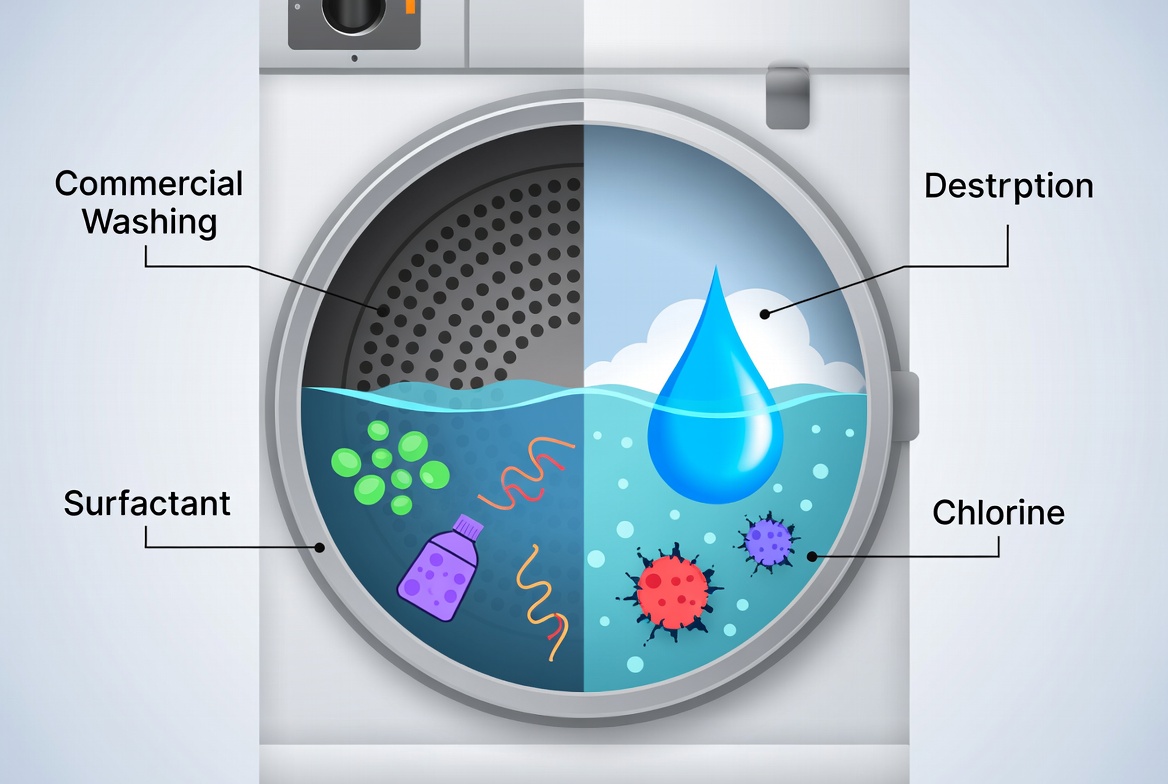
Commercial detergents are complex products. Understanding which components react poorly with bleach helps technical teams design better wash processes and product portfolios.
- Enzymes
High oxidative stress rapidly destroys enzyme activity. This means expensive premium detergents lose their edge if bleach is introduced at the wrong stage.
- Nitrogen‑rich additives
Certain builders and auxiliaries can act as precursors for irritant gases when exposed to strong oxidizers.
- Sensitive surfactants
Some surfactant systems degrade, causing changes in foaming, residue formation and oil soil removal.
- Additional oxidizers
Peroxide‑based components may compete with or destabilize chlorine, making the overall system less predictable.
For B2B buyers and technical consultants, the message is clear: even if products are individually well‑designed, mixing them without a structured plan can undermine the benefits built into their formulations.
Injury statistics and incident reports show that bleach and detergents remain among the common sources of cleaning‑product exposure for both domestic users and professionals. In many cases, incidents are not caused by gross negligence, but by small lapses: refilling in a hurry, poor container differentiation, or improvising when a machine appears under‑performing.
In industrial and institutional laundry environments, such events can have wider consequences:
- Emergency response, ventilation and temporary shutdown of affected areas.
- Investigation of staff health complaints and possible medical treatment.
- Disposal of contaminated linen and reprocessing of entire batches.
- Internal reviews and retraining that consume management time.
Rather than focusing only on regulatory compliance, leading facilities now treat chemical compatibility and handling as part of their core quality system. In this context, avoiding unnecessary mixing of bleach and detergent becomes a strategic choice, not just a safety precaution.
Many professional users still rely on chlorine bleach for whitening and disinfection, especially in healthcare and some industrial applications. At the same time, alternative oxidizing systems have become more accessible and widely used in B2B formulations.
- Chlorine bleach
Offers strong stain removal and disinfection at relatively low cost, but carries higher risk of gas formation, fiber damage and equipment stress when misused.
- Peracetic acid systems
Provide broad antimicrobial activity with fewer chlorinated by‑products, suitable for well‑controlled institutional processes.
- Oxygen‑based bleaching (e.g., sodium percarbonate)
Delivers fabric‑friendly whitening and brightening, especially at lower temperatures, and is often easier to integrate in multi‑component detergents.
- Enzymatic boosters and activators
Enhance soil removal and brightness, but are not a stand‑alone disinfection solution and must be used as part of a structured system.
In practice, many resilient laundry programs use oxygen‑based bleaching in the main wash, supported by carefully dosed specialty oxidizers for specific soil categories. This layered strategy reduces pressure on operators to improvise with "extra bleach" and lowers the inherent risk of incompatible mixing.
Even the best chemistry is only effective when supported by solid everyday procedures. Most incident reviews reveal that labels were technically correct, but how products were stored and handled made errors more likely.
Professional facilities can reduce accidental mixing by:
- Storing oxidizers separately from general detergents, with clear physical separation.
- Using dedicated dosing lines and pumps for bleach products, maintained on a strict schedule.
- Displaying simple visual diagrams near machines to show which chemical enters which stage.
- Training staff to recognize early warning signs such as unusual odor, fogging, or changes in foam.
These measures are not just formalities. They play a direct role in preventing staff exposure, preserving machine integrity and delivering consistent results to clients such as hotels, hospitals and industrial plants.
Product manufacturers serving B2B laundry sectors can contribute significantly to safer operations through thoughtful formulation design. While the safest approach remains strict separation of bleach and detergent dosing, some detergents are engineered to be more compatible if incidental contact occurs.
- Selecting surfactant systems with higher resistance to oxidative stress under typical wash conditions.
- Minimizing or excluding nitrogen‑heavy components that can participate in gas‑forming reactions.
- Using enzyme blends supported by stabilizers and matched to defined temperature and pH windows.
- Conducting long‑term compatibility tests on standard machine materials, seals and pump components.
For buyers, clear documentation of these properties supports internal audits and simplifies the development of standard operating procedures. For manufacturers, it strengthens trust with safety officers and technical decision‑makers.
No facility, regardless of size or maturity, can realistically guarantee zero incidents across many years of operation. The difference between a minor event and a serious disruption often lies in the first minutes after a problem is noticed.
If an unintended mix of bleach and detergent occurs:
1. Move staff away from the affected area and begin ventilation, opening doors or activating exhaust systems.
2. Stop chemical dosing and isolate the machine or line that is involved.
3. Follow internal instructions for containment, neutralization and cleanup based on product safety documentation.
4. Record the event with enough detail—time, products involved, observed effects—to refine procedures and training later.
Most exposures related to laundry products result in irritation rather than long‑term damage, but concentrated formulations and repeated contact can increase the seriousness of outcomes. Practiced response plans and clear responsibilities help protect workers and limit downtime.
Beyond immediate safety concerns, mixing bleach with detergents affects the economic picture of a laundry plant. Linens and machines represent substantial investment. Repeated exposure to harsh, unbalanced chemistries shortens their useful life.
Typical long‑term consequences include:
- Greying or yellowing of cotton textiles due to uncontrolled oxidation cycles.
- Loss of tensile strength, leading to more frequent tearing and higher replacement rates.
- Surface pitting and corrosion on machine parts that contact mixed liquors.
- Increased need for service interventions on pumps, valves and seals.
By keeping oxidizing steps separate and selecting fabric‑friendly systems wherever possible, facilities can protect both their textile assets and their capital equipment, while maintaining the hygiene standards expected by demanding sectors.
For commercial operations, the key decision is not simply about whether mixing is technically possible. The more relevant question is whether it supports reliable, scalable and defensible laundry programs under real‑world conditions.
A practical internal framework might include:
- Reviewing which soil categories genuinely require chlorine bleach, and where oxygen‑based systems could be sufficient.
- Assessing whether training and dosing technology are robust enough to maintain separate oxidizing steps consistently.
- Ensuring suppliers provide clear technical data on compatibility and long‑term effects on textiles and equipment.
- Aligning chemical choices with client expectations in healthcare, hospitality and industrial segments.
In many cases, the most resilient solution combines updated chemistry, disciplined operating procedures, and close cooperation between product suppliers and facility safety teams, rather than relying on informal mixing practices in the machine.
For professional and industrial laundry operations, mixing bleach and detergent is a decision with consequences that reach far beyond a single wash load. It affects worker health, textile performance, machine reliability and the overall reputation of the service provider. By understanding the underlying chemistry, learning from incident trends, investing in safer oxidizing systems and strengthening everyday protocols, facilities can significantly reduce risk while improving consistency.
The most robust programs treat chemical compatibility and handling as central pillars of operational excellence. When bleach is managed as a specialized tool—used with clear purpose, controlled dosing and strong safeguards—plants can achieve high hygiene standards without exposing staff, textiles or equipment to unnecessary danger.
Q1. Is it ever acceptable to add small amounts of bleach directly into a detergent wash in commercial machines?
In professional environments, the safest practice is to avoid uncontrolled mixing. Bleach should enter the process through dedicated dosing steps and clearly defined stages rather than being poured into a general detergent wash.
Q2. Can oxygen‑based bleaching completely replace chlorine bleach for all applications?
Oxygen‑based systems can handle many common stains and are often preferred for colored textiles, but certain high‑risk or heavily contaminated loads may still require chlorine‑based solutions under strict control.
Q3. How can a facility recognize that a mixing incident has occurred?
Early signs often include sudden odor changes, eye or throat irritation among staff, unusual foam behavior, or visible mist near machines, all of which should trigger immediate investigation and response.
Q4. Are children and other vulnerable people at higher risk from laundry chemical exposure?
Younger individuals are more likely to suffer accidental exposure in domestic and mixed‑use environments, which reinforces the need for secure storage, clear labeling and careful handling of concentrated laundry products.
Q5. What documentation is useful for auditing laundry chemical practices?
Internal procedures, training records, product data sheets and incident logs together provide a strong basis for reviewing chemical handling, segregation measures and emergency response readiness.
1. US News Health. "Danger at Home: Cleaning Products Are Harming Kids." https://www.usnews.com/news/health-news/articles/2026-04-07/danger-at-home-cleaning-products-are-harming-kids
2. Medscape. "Bleach, Detergents Drive Pediatric Injuries From Cleaners." https://www.medscape.com/viewarticle/bleach-detergents-drive-pediatric-injuries-cleaners-2026a1000a59
3. GOV.UK. "Sodium hypochlorite: general information." https://www.gov.uk/government/publications/sodium-hypochlorite-properties-incident-management-and-toxicology/sodium-hypochlorite-general-information
4. Poison.org. "Children and Laundry Products." https://www.poison.org/articles/laundry-products
5. ScienceDirect. "Critical review and probabilistic health hazard assessment of cleaning product ingredients in all-purpose cleaners, dish care products, and laundry care products." https://www.sciencedirect.com/science/article/pii/S0160412018330496
6. ESR. "Household Bleach Exposure – Health Risk Assessment." https://www.phfscience.nz/media/pymhism1/esr-health-risk-assessment-household-bleach.pdf
7. Finice Cleaning. "Can You Mix Bleach and Laundry Detergent? A B2B Guide to Safe Laundry Practices." https://finicecleaning.com/can-you-mix-bleach-and-laundry-detergent-a-b2b-guide-to-safe-laundry-practices/


