
Views: 283 Author: Magic Household Cleaning Publish Time: 2026-07-24 Origin: Site

Content Menu
● Understanding How Enzymes Work in Laundry Detergents
● What Makes an Enzyme Detergent Different?
● Liquid Enzyme Detergents: Quick Dissolution and Flexible Use
>> Tide‑Style Ultra Stain Release Liquids
>> Persil‑Style Deep Cleaning Liquids
>> Plant‑Based “Free & Clear” Liquids
>> Region‑Specific Liquid Enzyme Detergents
● Powder and Solid Enzyme Detergents: Shelf Stability and Bulk Value
>> Enzyme‑Enhanced Powders with Oxygen Bleach
>> Ethical and Environmentally Focused Enzyme Powders
>> Ariel‑Style Multi‑Enzyme Powders
● High‑Performance Enzyme Laundry Sheets: Compact and Concentrated
>> How Solid Enzyme Technology Works
>> Format Advantages for Users and Brands
>> Market Momentum Behind Detergent Sheets
● Specialty Enzyme Formulas for Specific Use Cases
>> Active Wear and Sports Laundry
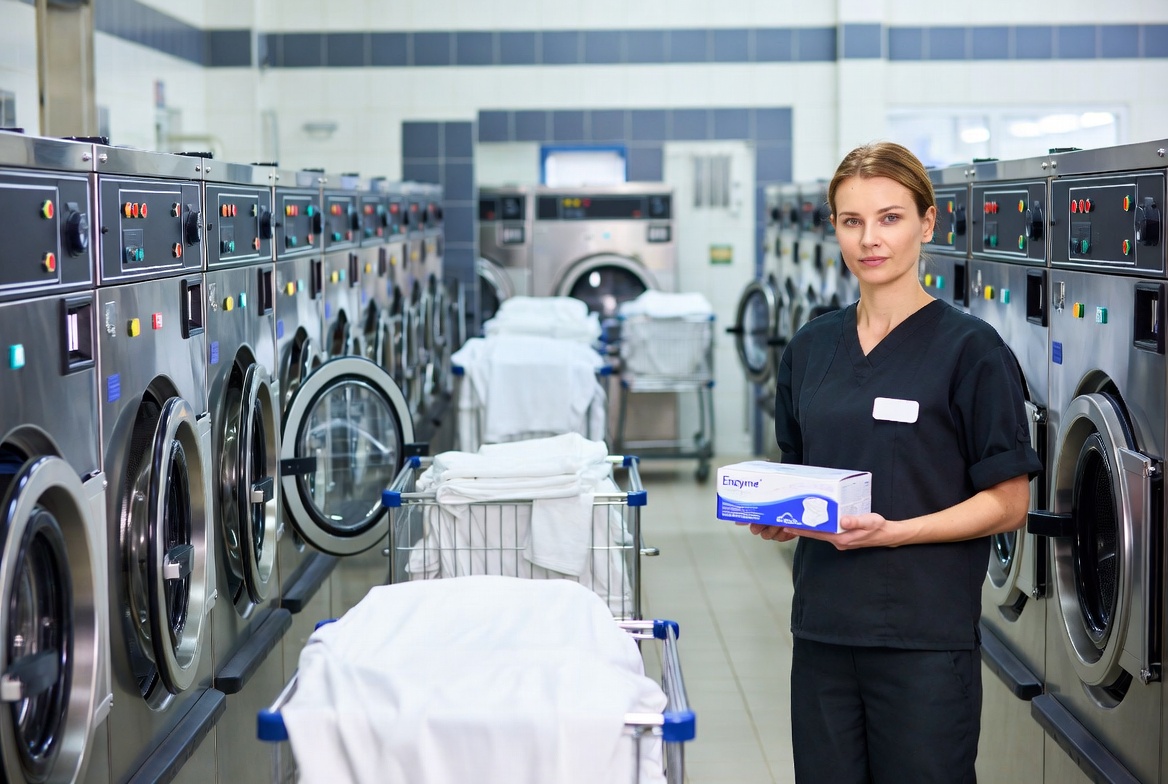
>> Professional and Commercial Laundry Needs
● How to Choose the Right Enzyme Detergent
>> 1. Identify Typical Stain Types
>> 2. Consider Wash Temperature and Cycle Length
>> 3. Align with Skin and Fragrance Preferences
>> 4. Factor in Environmental and Packaging Priorities
● Overview of Enzyme Detergent Formats
● Key Takeaways and Forward‑Looking Perspective
● Frequently Asked Questions (FAQ)
>> 1. Are enzyme detergents suitable for sensitive skin?
>> 2. Can enzyme detergents be used effectively in cold water?
>> 3. Do enzyme detergents damage delicate fabrics?
>> 4. How do enzyme laundry sheets compare with liquid detergents?
>> 5. Are enzyme detergents recommended for commercial and professional laundry operations?
Enzyme detergents have transformed everyday laundry by delivering powerful stain removal at lower temperatures while treating fabrics more gently than many traditional formulas. From household liquids and powders to compact detergent sheets used by leading brands worldwide, understanding how these products work makes it easier to choose the right solution for different fabrics, stain types, and usage scenarios. This article combines hands‑on experience with industry insights to give a clear, practical view of how enzyme detergents perform and why solid formats such as laundry sheets are rapidly gaining traction.
Enzymes are specialized proteins that accelerate specific cleaning reactions, helping detergents break down stains more efficiently without relying exclusively on strong alkalinity or heavy doses of bleaching agents. Instead of treating all stains as one problem, modern formulas use tailored enzyme blends to target different soil types on fabrics.
Common enzymes found in laundry detergents include:
- Protease – Designed to break down protein‑based stains such as blood, sweat, grass, dairy, and many food residues.
- Amylase – Targets starches found in sauces, gravies, baby food, and carbohydrate‑rich spills.
- Lipase – Focuses on oily and greasy stains created by cooking oils, skincare products, and cosmetics.
- Cellulase – Helps remove micro‑pills and surface fuzz from cotton and mixed fabrics, supporting color vibrancy and fabric smoothness.
Because these enzymes remain active at relatively low temperatures, enzyme detergents can deliver strong cleaning in cold or warm water. This can reduce energy consumption, extend the life of fabrics, and improve day‑to‑day wash results for both households and professional laundry operations.
Unlike conventional detergents that rely mainly on chemical strength, enzyme detergents use biological catalysts to break down specific stain components. This approach offers a number of practical advantages for users and manufacturers.
Key characteristics of enzyme detergents include:
- Targeted stain removal – Each enzyme addresses a class of stains, so a well‑designed blend can handle mixed soils in one wash cycle.
- Effective low‑temperature cleaning – Strong performance in cooler water supports energy savings and protects sensitive fabrics.
- Balanced formula design – The presence of enzymes allows formulators to optimize surfactants, builders, and other ingredients instead of relying on highly aggressive chemistry.
- Improved sustainability profile – Enzymes are biodegradable, and their efficiency can reduce the overall chemical load per wash when properly formulated.
For everyday laundry, the result is a detergent that feels more powerful on difficult stains while remaining considerate of skin comfort, fabric longevity, and environmental impact.
Liquid enzyme detergents remain a preferred option for many households due to their quick dissolution and ease of dosing. They are suitable for short wash cycles, cold‑water programs, and both standard and high‑efficiency washing machines.
Ultra stain‑focused liquids are typically formulated with a strong protease and amylase base, aimed at the combination of everyday protein and starch stains. They work well on food spills, school uniforms, sportswear, and mixed family loads.
Practical benefits include:
- Consistent performance on frequent stains such as sweat, sauces, and daily dirt.
- Reliable cleaning in cold water, helping households reduce energy use without sacrificing results.
- Support for heavy‑soil items like workwear, children’s clothing, and kitchen textiles.
Deep‑clean liquids combine robust enzyme systems with surfactant technologies designed to reach embedded stains and brighten fabrics. They are widely used where users want a single detergent to handle both fresh and set‑in soils.
Typical characteristics:
- Multi‑enzyme blends including protease and amylase, sometimes complemented by lipase.
- Suitability for high‑efficiency machines with low‑sudsing performance and fast dispersion.
- Balanced fragrance and brightness for general household use.
Plant‑based enzyme liquids demonstrate that effective stain removal and lower‑irritant formulations can be combined successfully. They typically emphasize protease within a base of plant‑derived surfactants and biodegradable ingredients.
They are especially attractive for consumers who value:
- Fragrance‑free or low‑fragrance washing for sensitive skin or scent preferences.
- Gentler ingredient profiles compared with heavily scented mainstream products.
- Transparency around sourcing, such as biobased content and responsible manufacturing claims.
In Asia–Pacific and other regions with compact washing machines and frequent small loads, liquid enzyme detergents are adapted for fast dispersion, short cycles, and strong odor control. Many of these products focus on school uniforms, activewear, and climate‑related odor challenges.
Key priorities often include:
- Fast action in short cycles and cooler water.
- Support for sweat and humidity‑related odors.
- Compatibility with compact, high‑efficiency appliances.
Powder detergents and solid formats remain important for users who prioritize storage stability, bulk purchasing, or specific performance requirements. Multi‑enzyme powders are common in markets where consumers expect strong whitening and odor control for heavier soils.
Powders that combine enzymes with oxygen‑based brighteners and odor‑control ingredients offer reliable results for towels, workwear, and mixed family loads. They typically pair protease and amylase with odor‑neutralizing components.
Advantages include:
- Longer shelf life compared with many liquid formulations when stored properly.
- Enhanced odor control for textiles that retain moisture and sweat.
- Visible brightening for white and light‑colored fabrics.
Some powder ranges integrate enzyme technology into broader ethical positioning, such as biodegradable ingredients, reduced packaging, and clear ingredient disclosure. Within these ranges, certain products may be enzyme‑rich for performance, while others are enzyme‑free for specialist usage and regulatory needs.
Common qualities:
- Options for sensitive skin with fragrance‑free, dye‑free variants.
- Biodegradable or plant‑based surfactants aligned with environmental goals.
- Distinct labeling that helps consumers choose between enzyme and non‑enzyme versions.
Multi‑enzyme powders used in many global markets show how protease, amylase, and cellulase can be combined to handle stains while preserving fabric appearance. These powders are popular where consumers prioritize visible brightness and color care in addition to stain removal.
They typically offer:
- Reliable performance across a range of temperatures.
- Support for color vibrancy and reduced fabric graying.
- Suitability for mixed loads that combine lightly and heavily soiled items.
The latest generation of enzyme laundry sheets represents a significant shift in how detergent is delivered. Instead of large bottles or boxes, cleaning power is concentrated into thin, solid sheets that dissolve quickly in water. From a product development perspective, this format offers both functional and logistical advantages.
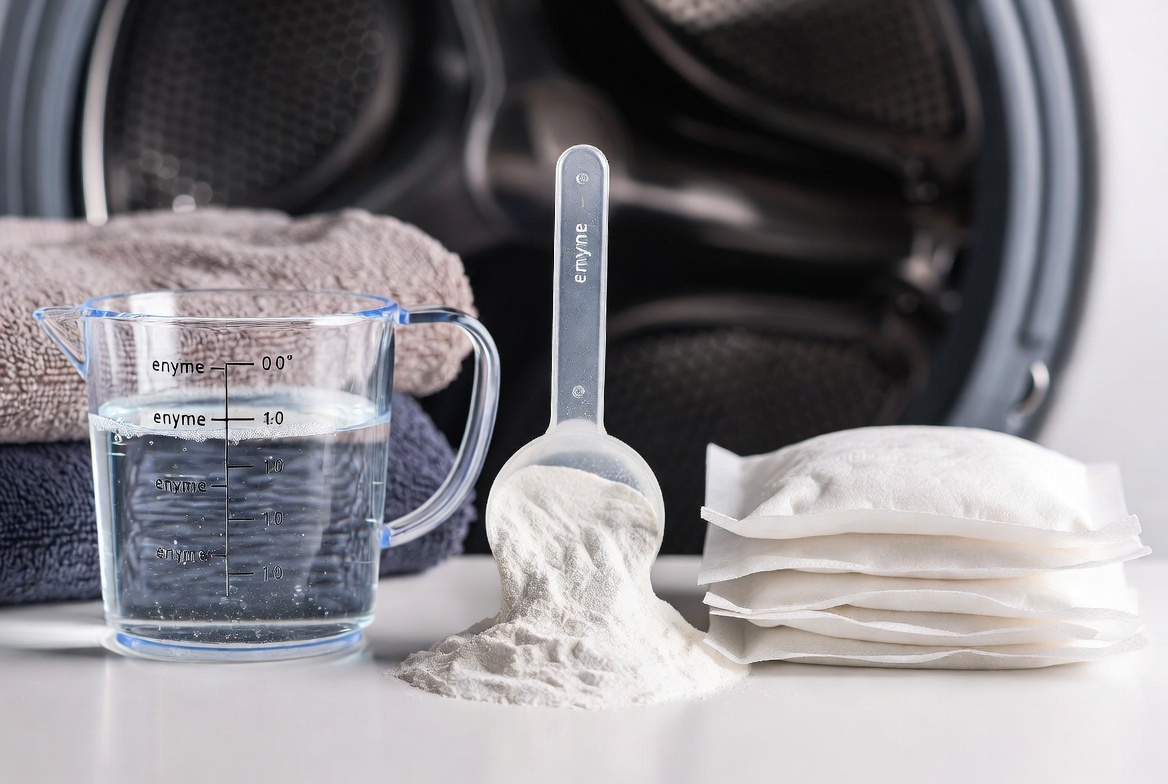
Solid enzyme sheets embed concentrated enzymes and surfactants into a water‑soluble matrix. When the sheet comes into contact with wash water, it disperses the active ingredients throughout the drum without leaving clumps or residue when correctly formulated.
Notable features include:
- High enzyme concentration relative to volume, which can deliver significantly more catalytic activity per unit than many standard liquids.
- Even dispersion in both front‑load and top‑load machines when the sheet is added correctly.
- Compact dosing that reduces the margin for error in everyday use.
For households, solid laundry sheets offer a mess‑free, space‑saving alternative to heavy liquid containers and dusty powders. For brands and retailers, the format streamlines logistics and opens up new product positioning opportunities.
Key advantages:
- Reduced packaging weight, which can lower transportation costs and complexity across regions.
- Less plastic usage compared with many conventional liquid containers.
- Convenient dosing with pre‑measured sheets that simplify instructions and user experience.
- Travel‑friendly and small‑space storage ideal for apartments, dorms, and mobile lifestyles.
Industry research shows rapid growth in the global laundry detergent sheets market, driven by consumer interest in compact, environmentally considerate products and the increasing availability of private‑label sheet offerings. Fragrance‑free and hypoallergenic sheet variants are expanding quickly as more users look for products that combine strong performance with gentler composition.
Manufacturers with integrated research and large‑scale production capacity are now supporting hundreds of brands worldwide through customized sheet formulations, adjusted enzyme blends, and tailored packaging designs. As awareness rises and distribution widens, detergent sheets are positioning themselves as a leading format in the future of everyday laundry.
Beyond mainstream household products, specialized enzyme detergents focus on narrow, high‑demand scenarios such as sportswear, cloth diapers, hospitality linens, and pet‑related textiles. These products adjust enzyme blends and supporting ingredients to handle unusually challenging soils.
Sportswear‑focused detergents often combine protease, amylase, and lipase to manage sweat, body oils, and synthetic‑fabric odors. They are designed to clean deeply without damaging elastic fibers or performance finishes.
They tend to provide:
- Low residue to prevent build‑up that traps odors in technical fabrics.
- Effective odor management for frequently used gym and team clothing.
- Support for frequent washing without rapid fabric degradation.
Hotels, healthcare facilities, and industrial laundries often rely on enzyme detergents to achieve high hygiene standards and stain removal while controlling costs and cycle times. Multi‑enzyme systems help these operations wash large volumes of textiles at lower temperatures, saving energy and extending fabric life.
For such users, important benefits include:
- Robust performance on a wide range of stains, from food and beverages to bodily fluids.
- Compatibility with automated dosing systems and different machine sizes.
- Predictable results essential for customer satisfaction and regulatory compliance.
Choosing the most suitable enzyme detergent is easier when the selection process is structured around real‑world needs rather than marketing claims. The following criteria can be used as a practical checklist.
- If frequent stains are protein‑based (blood, sweat, dairy, grass), prioritize detergents with a strong protease component.
- If many stains involve starchy foods (sauces, gravies, baby food), look for formulas that highlight amylase.
- If oils and grease are common (cooking, cosmetics, skincare), choose products that clearly state lipase or equivalent oil‑targeting systems.
- For predominantly cold‑water washing, enzyme detergents that explicitly mention cold‑wash performance are advantageous.
- For short cycles, quick‑dissolving liquids or solid sheets reduce the risk of incomplete dispersion.
- For mixed routines, a versatile enzyme formula that performs across different temperatures may be the best long‑term choice.
- Users with sensitive skin may prefer fragrance‑free or lightly scented enzyme detergents with simple labeling.
- Households that value fragrance can look for modern scent systems designed to be less irritating while still delivering a noticeable aroma.
- For baby clothes and delicate items, milder formulas with balanced enzyme levels are often preferred.
- Those who want to reduce plastic waste may lean toward solid detergent sheets or concentrated powders with minimal packaging.
- Users who focus on ingredient origin can prioritize biobased or plant‑derived formulations.
- Households with limited storage space often find compact sheets or small‑format concentrates more practical.
The table below summarizes key differences between popular enzyme detergent formats from the perspective of everyday use.
| Format | Main Advantages | Typical Use Cases | Points to Watch |
|---|---|---|---|
| Liquid enzyme detergent | Fast dissolution, flexible dosing, strong cold‑water performance. | Mixed family loads, quick cycles, frequent small washes. | Heavier packaging, potential enzyme degradation over long storage. |
| Powder enzyme detergent | Good shelf stability, strong brightening, bulk value. | Heavier soils, towels and linens, bulk purchases. | Possible residue if dosing or water quality is not optimal. |
| Enzyme laundry sheets | Compact, pre‑measured, reduced plastic, travel‑friendly. | Space‑constrained homes, travel, modern sustainable positioning. | Requires correct placement in drum for full dissolution. |
| Specialty sportswear formulas | Enhanced odor control, protection of technical fabrics. | Sports gear, gym clothing, team uniforms. | Best kept for relevant loads rather than general use. |
Enzyme detergents represent a mature yet still evolving category in fabric care. By focusing on biological catalysts rather than raw chemical intensity, these products deliver effective stain removal while supporting lower‑temperature washing, improved fabric longevity, and, in many cases, more considerate ingredient profiles.
Liquid and powder formats continue to serve households and businesses that rely on familiar usage patterns, while solid enzyme laundry sheets are rapidly emerging as a compact, efficient, and packaging‑conscious alternative. For brand owners and manufacturers, this shift opens up new opportunities in product differentiation, private‑label development, and international distribution.
For everyday users and professional laundry operators alike, the most effective approach is to match detergent choice to real usage habits: stain types, wash temperatures, machine technology, and personal priorities around comfort and environmental impact. With a clear understanding of how enzyme systems function and how each format performs, it becomes much easier to select products that deliver reliable results wash after wash and contribute to a more efficient, forward‑looking fabric‑care routine.
Enzyme detergents can work well for sensitive skin when they are formulated without strong dyes and heavy fragrances and when rinsing performance is good. Many fragrance‑free and low‑irritant products use carefully balanced enzyme systems to deliver stain removal while minimizing the risk of discomfort.
Yes. Enzymes are designed to remain active at relatively low temperatures, so enzyme detergents are particularly well suited to cold‑water washing. This improves energy efficiency and helps protect fabrics that might otherwise fade or wear out more quickly under frequent hot washes.
When used according to the manufacturer’s instructions, enzyme detergents are generally compatible with most everyday fabrics. Some very delicate materials may require specialized care, but for cotton, blends, and common synthetic textiles, enzyme formulations often reduce the need for harsh pre‑treatments and aggressive cycles.
Enzyme laundry sheets offer comparable cleaning performance to many liquids, with the added benefits of compact packaging, pre‑measured dosing, and lower packaging weight. They are convenient for small living spaces, travel, and users who prefer a tidy, spill‑free format.
Many commercial laundries use enzyme detergents to improve stain removal and reduce the temperature and length of wash cycles. The ability to clean effectively at lower temperatures supports energy savings, prolongs fabric life, and helps maintain consistent quality across large volumes of textiles.
1. Exploring Enzyme Detergent Brands: Liquid, Powder, and Beyond – Finice Cleaning
https://finicecleaning.com/exploring-enzyme-detergent-brands-liquid-powder-and-beyond/
2. Laundry Detergent Sheets Market Size Outlook, 2026 – VPA Research
https://www.marketresearch.com/VPA-Research-v4245/Laundry-Detergent-Sheets-Size-Outlook-43090343/
3. Consumer Trends Driving Laundry Detergent Sheets Fragrance‑Free Market – Data Insights Reports
https://www.datainsightsreports.com/reports/laundry-detergent-sheets-fragrancefree-market-90329
4. Laundry Detergent Sheets Market Size & Trends, 2033 – Persistence Market Research
https://www.persistencemarketresearch.com/market-research/laundry-detergent-sheets-market.asp
5. Laundry Detergent Sheets Market Outlook 2026–2035 – Business Research Insights
https://www.businessresearchinsights.com/market-reports/laundry-detergent-sheets-market-117963
6. Global Laundry Detergent Sheets Market Outlook 2026–2033 – LinkedIn Article
https://www.linkedin.com/pulse/global-laundry-detergent-sheets-market-outlook-2026-2033-mfbac
7. Laundry Detergent Sheets Market to Grow by USD 322 Million – Finance‑related News Report
https://finance.yahoo.com/news/laundry-detergent-sheets-market-grow-102600793.html


