
Views: 229 Author: Magic Household Cleaning Publish Time: 2026-07-26 Origin: Site
Content Menu
● What Each Product Is Designed to Do
● Why Hospitals Need More Than Convenience
● Where Laundry Sheets Make Sense
● Where Hospital-Grade Detergent Wins
● What Buyers Should Check Before Choosing
>> 1. Soil type
● New Trend: Smarter Formulas for Institutional Laundry
● Expert View From a Manufacturing Perspective
● How to Choose the Right Product
● Why This Matters for B2B Brands
● FAQ
In professional laundry operations, the real question is not simply which product cleans clothes. The real question is which formula can deliver consistent hygiene, fabric protection, operational efficiency, and cost control at scale. For hospitals, clinics, care homes, hospitality groups, and industrial buyers, the choice between hospital-grade laundry detergent and laundry detergent sheets can directly affect cleaning outcomes, linen life, and compliance expectations.
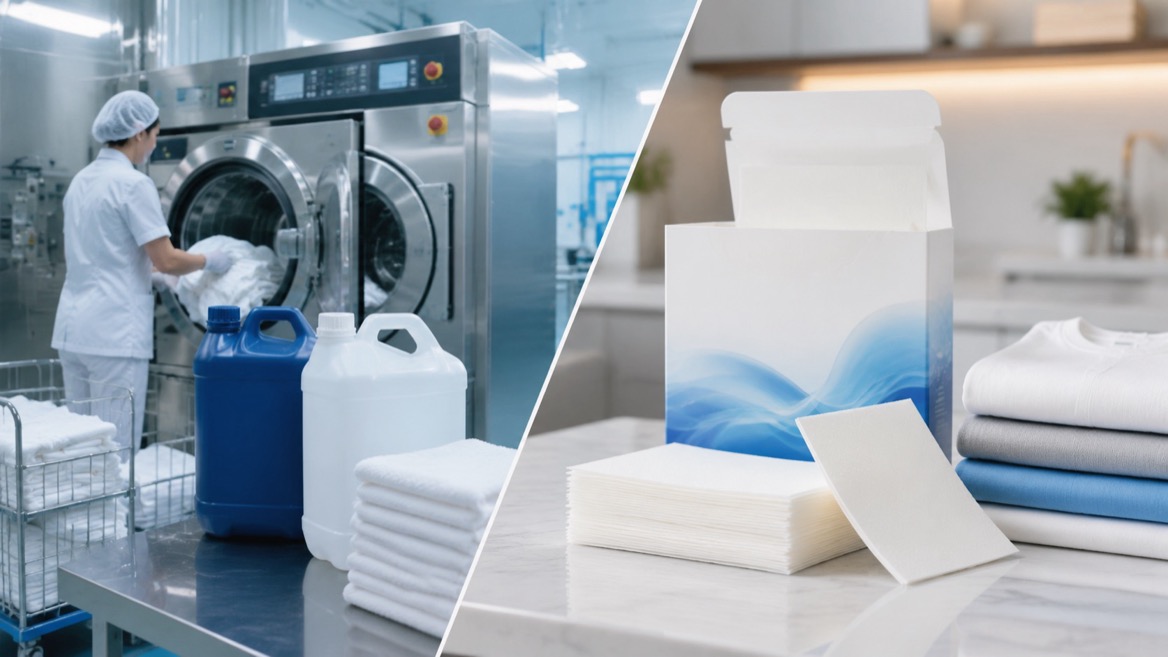
Hospital-grade laundry detergent is formulated for demanding environments where linens may carry heavy soil, body fluids, odor, and contamination risks. It is typically engineered for institutional wash cycles, higher alkalinity, strong surfactant systems, and performance under repeated commercial laundering.
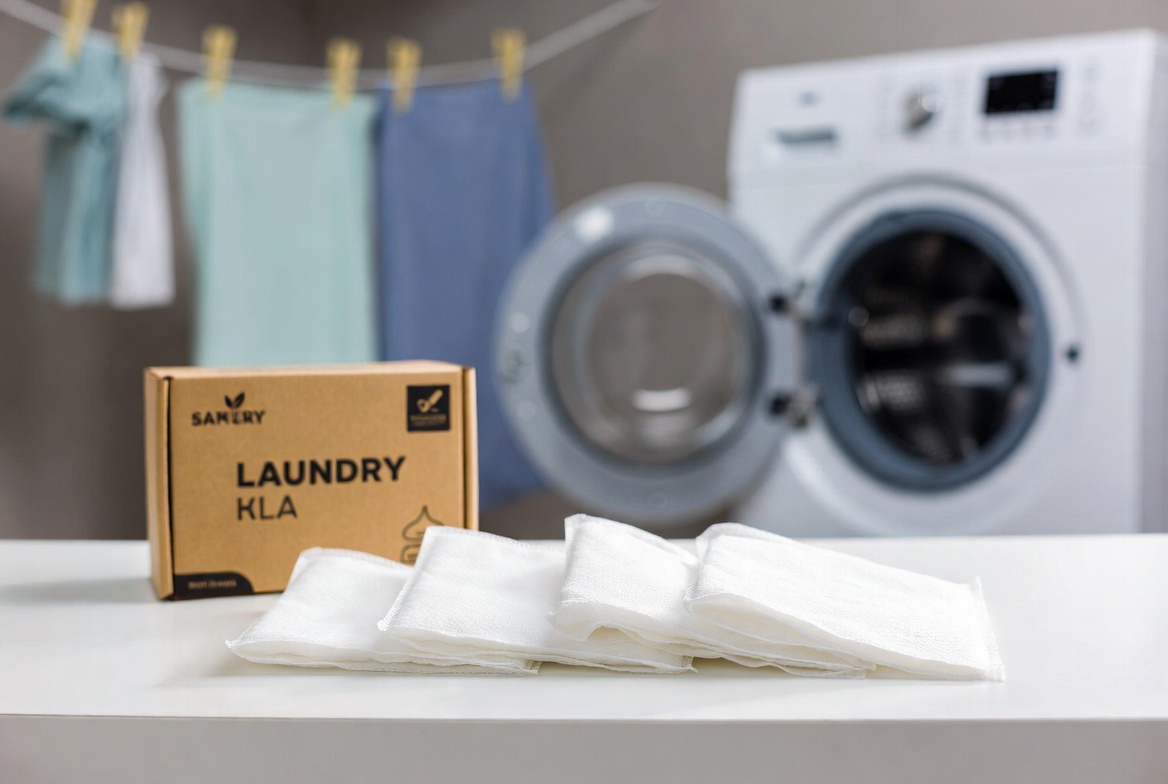
Laundry detergent sheets are a newer format. They are compact, pre-measured, and designed to dissolve in water. In consumer and light-commercial settings, they are popular because they reduce packaging waste, simplify dosing, and make storage easier. For some operations, they are convenient. For others, their performance profile may be too limited for high-risk or high-volume laundry.
The biggest difference is purpose. Hospital-grade detergent is built for high-performance cleaning and sanitation support in professional environments. Laundry detergent sheets are built for simplicity, portability, and everyday washing convenience.
That means the two products are not always direct substitutes. A sheet may be sufficient for light soil, routine uniforms, or travel laundry. A hospital-grade formula is more appropriate when the load includes heavy contaminants, large wash volumes, and strict hygiene targets.
| Factor | Hospital-Grade Laundry Detergent | Laundry Detergent Sheets |
|---|---|---|
| Main use | Healthcare, institutional, commercial laundry | Home use, travel, light commercial use |
| Soil removal | Strong against heavy soil, blood, body fluids, grease | Better for everyday dirt and moderate stains |
| Dosing | Flexible and scalable | Pre-measured and simple |
| Storage | Usually bulk format | Thin, lightweight, compact |
| Fabric care | Designed to balance cleaning and linen life | Generally gentle, but varies by formula |
| Compliance focus | Higher expectation for testing and documentation | Usually consumer-oriented |
| Operational efficiency | Strong for large laundry programs | Convenient for small loads and mobile use |
| Best fit | Hospitals, clinics, laundries, care facilities | Consumers, hospitality travel kits, small-volume use |
Healthcare laundry is not just about appearance. Linens can carry blood, sweat, proteins, bacteria, viruses, and odor-causing residues. A detergent in this environment must do more than smell clean. It must help remove contamination efficiently while protecting fabric from damage caused by repeated washing.
In real hospital operations, performance matters across the full wash process. That includes water temperature, wash time, rinse quality, chemistry balance, and mechanical action. A product that is convenient in a home setting may not provide the same soil removal strength, formulation depth, or process control needed in a medical facility.
Laundry detergent sheets are attractive when the priority is simplicity. They reduce the need for measuring, pouring, and storing heavy bottles. They are also easy to ship, easy to pack, and useful for brands that want a cleaner, more modern product presentation.
They can work well for:
- Home laundry with light to moderate soil.
- Travel and hospitality amenity kits.
- Small offices or low-volume cleaning programs.
- Brands seeking compact packaging and lower plastic use.
For these scenarios, sheets can create a strong user experience. They are easy to understand, easy to use, and easy to retail.
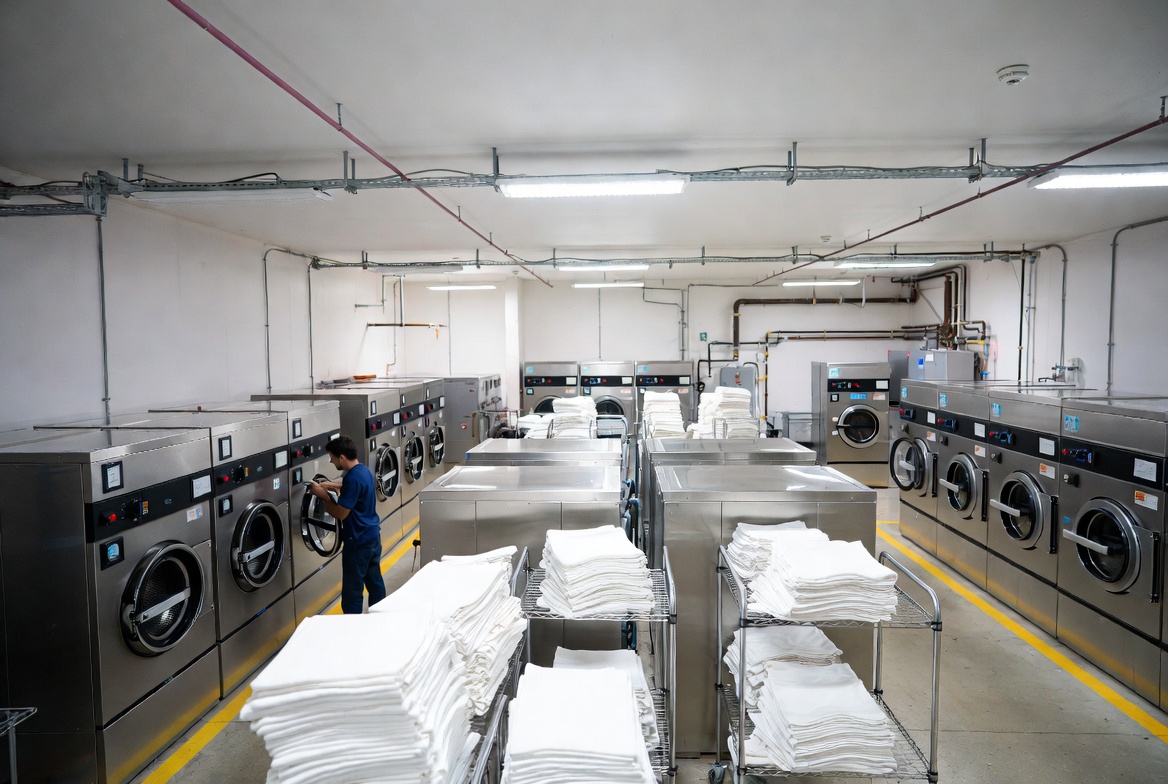
Hospital-grade detergent is the better choice when the priority is performance under pressure. In institutional environments, the detergent must cope with large loads, frequent washing, and difficult contaminants. It also needs to support consistent results across different machines and operating teams.
This format is especially important for:
- Hospitals and clinics.
- Nursing homes and long-term care facilities.
- Commercial laundries serving healthcare clients.
- Uniform programs with heavy soil.
- Linen services that require repeatable results.
For these buyers, the goal is not novelty. The goal is dependable cleaning power, operational stability, and long-term value.
Many buyers compare detergent products by unit price, but that is often misleading. The better question is cost per acceptable clean load. A cheaper product that needs rewashing, overdosing, or extra labor can become more expensive than a premium formula.
A hospital-grade detergent may cost more upfront, but it can reduce hidden costs such as:
- Rewash labor.
- Fabric replacement.
- Downtime in laundry operations.
- Customer complaints or hygiene risks.
- Storage and handling inefficiency.
Laundry detergent sheets may lower some handling costs, but they may not always deliver the cleaning strength needed for institutional work. In other words, convenience is valuable, but only if it matches the workload.
Before selecting a laundry chemistry for professional use, buyers should evaluate the product against the actual operating environment. The right choice depends on more than marketing claims.
If the laundry includes proteins, medical contamination, grease, or industrial grime, the formula must be strong enough to break those soils down.
The detergent should perform well in the actual machine type, water hardness, temperature range, and wash cycle length used by the facility.
High-performance cleaning should not destroy linens too quickly. Buyers should look for a balance between stain removal and fabric protection.
Bulk formulas can be tuned for different loads. Sheets simplify dosing, but they may offer less flexibility for difficult wash conditions.
Professional buyers often need product specifications, test support, and quality consistency from the supplier.
One of the biggest shifts in the laundry market is the move toward high-efficiency, lower-residue, and more concentrated systems. Commercial users want stronger performance with less waste, less water, and fewer operational steps.
This is where product innovation matters. Modern institutional detergents are increasingly designed to:
- Work in lower-temperature washes.
- Reduce residue buildup.
- Improve rinse efficiency.
- Extend textile life.
- Support more sustainable packaging and logistics.
For manufacturers, this means the winning product is no longer just the strongest cleaner. It is the one that balances performance, sustainability, and process efficiency.
From a manufacturing standpoint, hospital laundry chemistry and detergent sheets solve different business problems. Hospital-grade detergent is a system product. It must be engineered for large-scale consistency, supply reliability, and repeatable cleaning outcomes. Laundry sheets, by contrast, are often judged more by convenience, branding, and consumer-friendly packaging.
For B2B buyers, this distinction matters. If your customer values clinical reliability, heavy-duty soil removal, and documented process performance, a hospital-grade solution is usually the stronger fit. If your market values portability, small packaging, and everyday convenience, detergent sheets can be a better commercial story.
A simple rule works well:
1. Choose hospital-grade laundry detergent when the laundry environment is controlled, demanding, and hygiene-sensitive.
2. Choose laundry detergent sheets when the laundry volume is smaller, soil levels are lighter, and convenience is the priority.
3. Use a hybrid strategy only if your product line serves both institutional and consumer segments.
4. Match the chemistry to the customer's machine, workflow, and compliance needs.
5. Always test on the real fabrics and real soil conditions before scaling.
For brands selling into healthcare, cleaning, or professional laundry channels, the product choice affects more than cleaning performance. It shapes your positioning, pricing, packaging, supply chain, and customer trust. A clearly defined product strategy helps you avoid confusing your market with a one-size-fits-all promise.
That is why manufacturers with broad production capacity and export experience can create stronger value. They can tailor formulas, packaging formats, and dosing systems for different buyer segments instead of forcing every customer into the same product model.
Hospital-grade laundry detergent and laundry detergent sheets are not competing in the same category. They solve different problems for different users. If the goal is high-volume, high-risk, professional laundry, hospital-grade detergent is the stronger option. If the goal is portability, convenience, and light-duty use, detergent sheets are highly attractive.
For B2B buyers, the best decision comes from matching the product to the real operating environment, not just the marketing message. If your business serves healthcare, hospitality, or institutional laundry customers, product performance and consistency should always come first.
For brands and distributors looking to develop hospital-grade laundry solutions or customize laundry detergent sheet products for different markets, choose a manufacturing partner that can support formula development, scalable production, and export-ready quality control.
1. Are laundry detergent sheets strong enough for hospital laundry?
Usually not for full hospital operations. They are better suited to light or moderate laundry loads, not heavy contamination or high-volume institutional use.
2. Is hospital-grade laundry detergent only for hospitals?
No. It is also suitable for clinics, nursing homes, commercial laundries, and other professional settings with demanding hygiene needs.
3. Do detergent sheets save money?
They can save space, reduce packaging, and simplify dosing. However, total cost depends on cleaning performance, rewashing rates, and load requirements.
4. Which product is better for fabric life?
That depends on the formula and wash program. A well-designed hospital-grade detergent can protect linens in commercial use, while sheets may be gentler for everyday laundry.
5. Can one product replace both formats?
In most cases, no. The two formats are designed for different buyers, wash conditions, and performance expectations.
6. What should B2B buyers test first?
They should test soil removal, rinse quality, fabric feel, dosing accuracy, and performance on their own machine and water conditions.
1. [Hospital-Grade Laundry Detergent: Meeting the High Standards]
2. [Performance™ Industrial XXL Laundry Program]
3. [Should You Switch to Laundry Detergent Sheets? A Complete Decision Guide]
4. [Industrial Laundry Detergent Market Size, Share, Growth]


