
Views: 279 Author: Magic Household Cleaning Publish Time: 2026-09-16 Origin: Site
Content Menu
● Is Laundry Detergent Really Toxic?
● Ingredients to Review on Laundry Detergent Labels
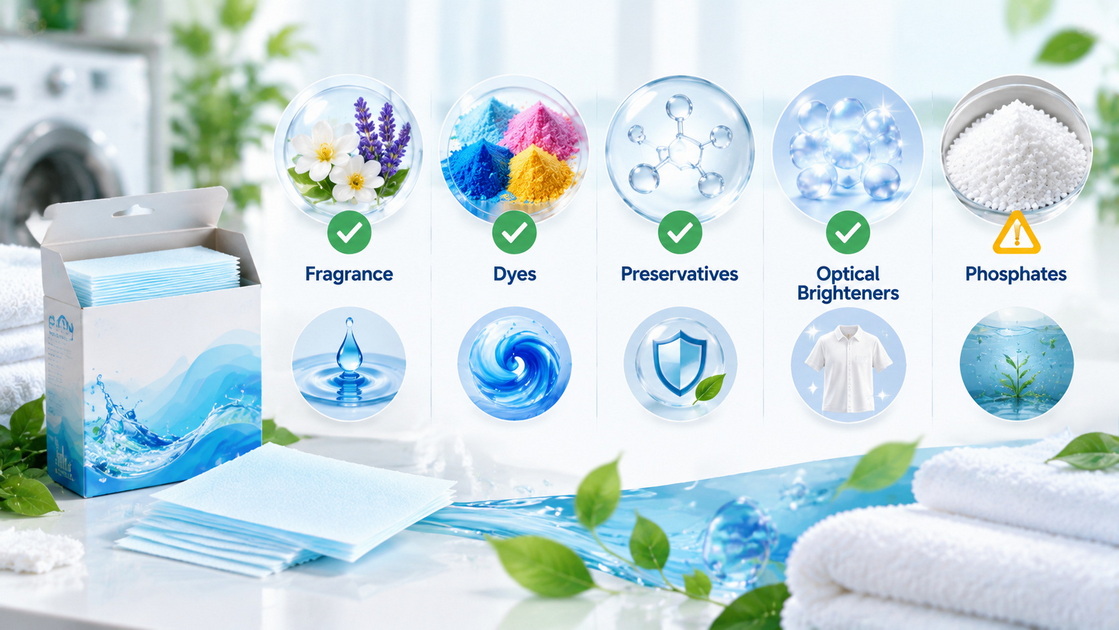
>> Fragrance and masking scents
>> Phosphates
● What Makes a Laundry Detergent Safer?
● Why Laundry Detergent Sheets Can Be a Practical Alternative
>> What to test before launching a laundry sheet
● Build Safety Into the Product Brief
● How to Switch to a Safer Laundry Routine
● Choose a Formula You Can Verify
>> 1. Is laundry detergent toxic to humans?
>> 2. What is the best laundry detergent for sensitive skin?
>> 3. Are laundry detergent sheets better than liquid detergent?
>> 4. Does "unscented" mean fragrance-free?
>> 5. Should I avoid phosphates in laundry detergent?
>> 6. Can essential oils cause laundry detergent sensitivity?
>> 7. What should an OEM laundry detergent sheet supplier provide?
Laundry detergent is not automatically "toxic," but some formulas can include ingredients that are more likely to irritate sensitive skin, complicate allergy avoidance, or create unnecessary environmental concerns. A better approach is to choose a transparent, well-tested laundry detergent based on your household's needs—especially if you are managing fragrance sensitivity, eczema-prone skin, baby laundry, or a low-waste lifestyle.
For consumers, this means learning how to read detergent labels beyond marketing terms such as "natural," "green," or "hypoallergenic." For retailers and private-label brands, it means developing laundry detergent sheets with clearly defined ingredient standards, substantiated claims, reliable dissolution, and packaging that genuinely reduces unnecessary plastic.
The word "toxic" is often too broad to be useful. A laundry detergent can be safe when used as directed while still being a poor match for a person with fragrance allergy, eczema, damaged skin barriers, or specific ingredient sensitivities.
The more practical question is:
Does this detergent contain ingredients that may be unsuitable for my skin, my household, or my environmental priorities?
Laundry products can contain surfactants, builders, enzymes, preservatives, dyes, optical brighteners, and fragrance. Each ingredient category has a functional purpose. For example, surfactants lift oily soil from fabric, builders improve cleaning in hard water, and enzymes help break down protein- or starch-based stains.
However, consumers may prefer to avoid or minimize certain ingredients—particularly when they have known sensitivities or want a formula with a simpler disclosure profile.
A peer-reviewed review of common textile-care products identified several potential contact allergens, including fragrance compounds, preservatives, surfactants, and certain botanical or functional ingredients. It found that fragrances and essential oils were among the most common allergens identified across laundry detergents, fabric softeners, dryer sheets, and stain removers.
That does not mean every scented detergent causes a reaction. It does mean that people with an established fragrance allergy or persistent unexplained skin irritation should consider a more cautious, fragrance-free approach.
Instead of assuming every conventional detergent is harmful—or that every "eco" product is automatically better—review the product label, complete ingredient disclosure, safety data sheet where available, and third-party certifications.
Fragrance is often the first ingredient category to review for people with sensitive or allergy-prone skin.
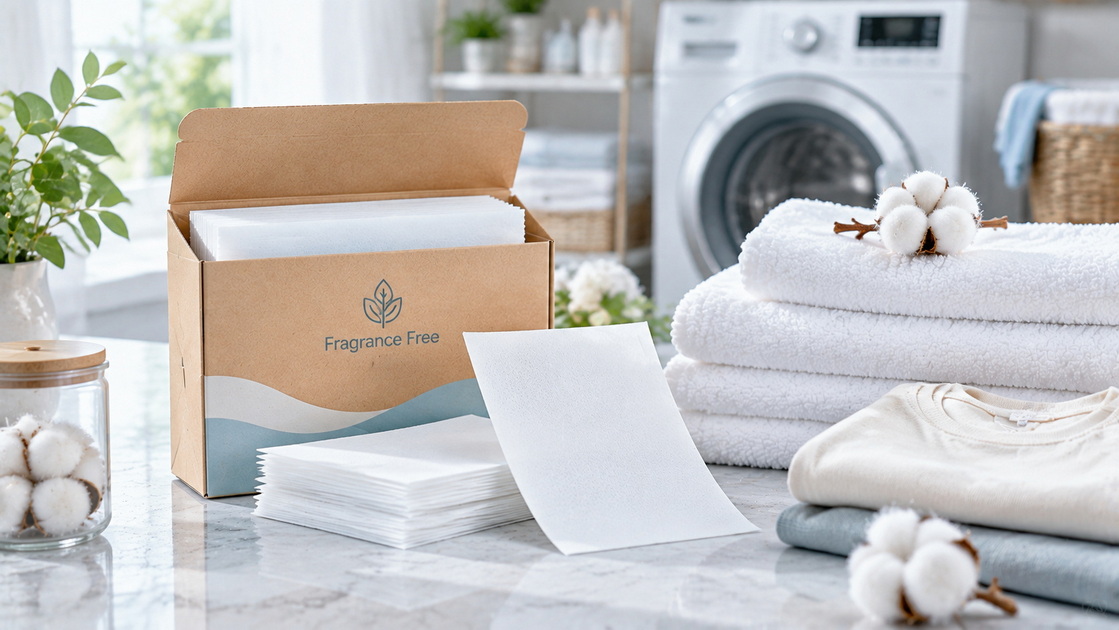
A product labeled "fragrance-free" should not contain fragrance materials or masking scents. By contrast, "unscented" can mean that a product has no noticeable odor but may still include ingredients that mask the smell of other raw materials. The U.S. Environmental Protection Agency makes this distinction in its Safer Choice fragrance-free guidance.
For a household managing fragrance sensitivity, the practical shopping rule is simple:
- Choose fragrance-free, not merely "unscented."
- Avoid assuming that essential-oil-based fragrance is automatically suitable for sensitive skin.
- Check whether a formula includes complete ingredient disclosure.
- Introduce one new product at a time when troubleshooting a possible reaction.
Dyes do not normally improve stain removal. They are often added for product appearance. A dye-free formula can be a sensible preference for consumers seeking a more minimal product profile, particularly for baby laundry or sensitive-skin households.
Liquid detergents commonly need preservatives because they contain water. Some individuals may be sensitive to particular preservatives, including isothiazolinones. If a person has received a patch-test diagnosis or a dermatologist has identified a specific allergen, they should compare the product's ingredient list with their individual avoidance list.
Optical brighteners are designed to make fabrics appear whiter or brighter by altering how light is reflected. They are not identical to bleaching agents, and they do not necessarily indicate that a detergent is unsafe. Still, consumers who prefer a reduced-ingredient formula may choose products without them.
Phosphates can soften water and improve cleaning performance, but excess phosphorus entering waterways can contribute to nutrient pollution. High nutrient levels may encourage algae growth, which can reduce oxygen in water as algae decompose and harm aquatic ecosystems.
Phosphate restrictions differ by region and product category. Brands selling internationally should verify destination-market rules rather than making broad compliance claims without documentation.
A safer detergent is not defined by a single buzzword. It is defined by fit, transparency, substantiation, and responsible use.
For many households, a lower-concern laundry detergent may have the following characteristics:
| What to look for | Why it matters | Questions to ask |
|---|---|---|
| Clear ingredient disclosure | Makes comparison and allergen avoidance easier | Are ingredients listed clearly? |
| Fragrance-free option | Helpful for people avoiding fragrance materials | Is it actually fragrance-free, not only unscented? |
| Dye-free formulation | Removes a non-cleaning color additive | Are colorants necessary? |
| Appropriate certifications | Adds an external review layer | Is the certification valid for this exact product? |
| Good dissolution | Helps prevent visible residue and inconsistent cleaning | Does it dissolve in cold and warm water? |
| Correct dosage guidance | Reduces waste, overdosing, and rinsing issues | Is the dose clear for load size and water hardness? |
| Lower-waste packaging | Can reduce plastic and shipping weight | Is the package recyclable or plastic-free where facilities exist? |
The EPA's Safer Choice label is one useful signal in the U.S. market. The program is designed to help consumers and commercial purchasers identify products that perform while containing ingredients the EPA considers safer for human health and the environment.
A certification alone should not replace label reading. However, it can be a meaningful part of a brand's quality and compliance strategy.
"Hypoallergenic" sounds reassuring, but it should not be treated as a guarantee that a product will never cause irritation. Individual reactions vary, and marketing claims may not explain which allergens were excluded, what testing was performed, or whether fragrance and masking scents are absent.
For consumers with known contact allergies, ingredient-specific avoidance is more valuable than broad claims.
A practical selection process looks like this:
1. Start with a detergent labeled fragrance-free and dye-free.
2. Read the ingredient list before purchase.
3. Avoid adding fabric softener, scent boosters, dryer sheets, and scented stain treatments while troubleshooting skin irritation.
4. Wash a small load of frequently worn items first.
5. Use the recommended dose rather than overpouring or using multiple products.
6. If symptoms persist, consult a clinician or dermatologist; patch testing may help identify specific allergens.
A clinical review notes that although laundry detergent is often blamed for allergic contact dermatitis, the actual prevalence of detergent-related allergic contact dermatitis appears to be low. Still, possible allergens can include fragrances, preservatives, surfactants, brighteners, enzymes, dyes, and bleaching ingredients.
That perspective matters: do not panic, but do investigate carefully and systematically.
Laundry detergent sheets are pre-measured, lightweight detergent formats designed to dissolve in the wash. They are increasingly used by consumers who want a mess-free alternative to large liquid bottles and by brands seeking a compact private-label product format.
When formulated and manufactured well, laundry sheets can offer several practical benefits:
- Pre-measured dosing can reduce guesswork and accidental overdosing.
- Compact storage can be useful in apartments, dorms, RVs, and travel settings.
- Lower shipping weight may reduce logistics burdens compared with water-heavy liquid products.
- Paper-based carton options can reduce reliance on rigid plastic bottles.
- Customizable formats enable brands to choose fragrance-free, scented, color-catcher, softening, or specialty positioning.
However, not all laundry sheets perform equally. A sheet should be tested for dissolution, cleaning performance, residue, fragrance stability, packaging compatibility, and performance under the intended wash conditions.

For brand owners, importers, and retailers, a visually attractive detergent sheet is not enough. Product development should include:
1. Cold-water dissolution testing to verify that the sheet disperses under realistic wash cycles.
2. Hard-water performance testing because mineral content can change cleaning results.
3. Stain-removal testing on representative stains such as food oils, soil, body oils, and protein-based stains.
4. Residue and rinsability checks on dark fabrics, towels, synthetics, and high-efficiency machines.
5. Packaging stability testing for heat, humidity, shipping vibration, and shelf life.
6. Claim substantiation for terms such as "biodegradable," "plastic-free," "phosphate-free," "fragrance-free," or "suitable for sensitive skin."
7. Market-specific compliance review for ingredient restrictions, labeling, language, claims, and safety documentation.
At Foshan Magic Crystal Technology Development Co., Ltd., laundry detergent sheet development should begin with a claims-and-compliance brief, not with packaging artwork.
As a manufacturer serving global OEM/ODM projects across laundry care, home care, personal care, and pet cleaning categories, the most reliable way to support a brand is to define the target market before formula selection. A product intended for the United States, European Union, United Kingdom, Australia, or Middle East may face different labeling expectations, ingredient restrictions, claim requirements, and buyer preferences.
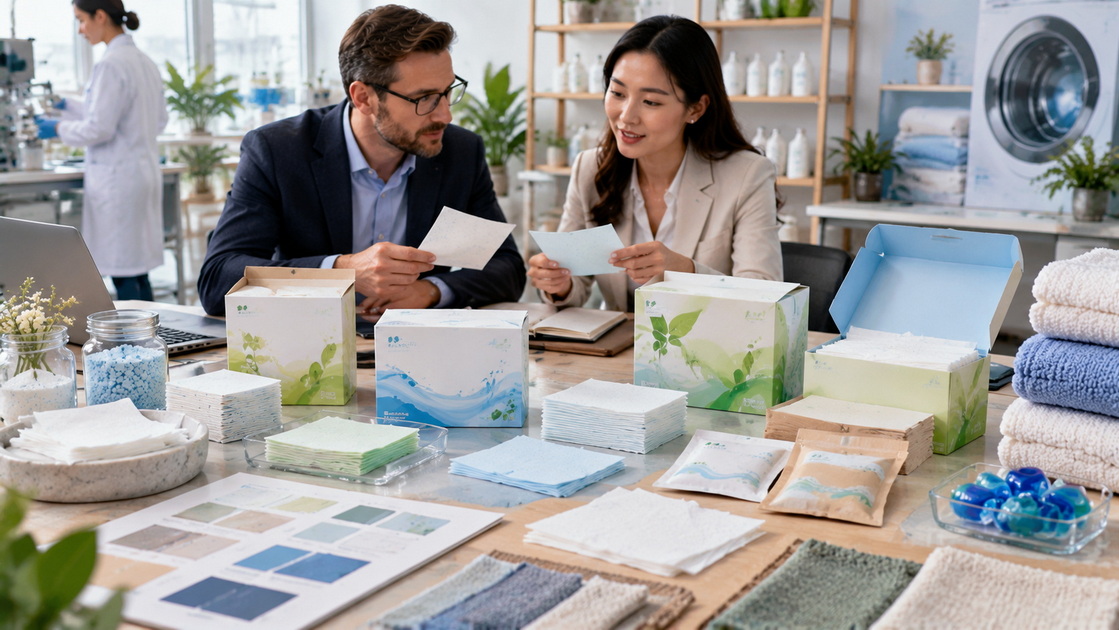
For a detergent-sheet private-label project, a strong development brief should specify:
- Target country or sales region.
- Target consumer, such as families, travelers, sensitive-skin households, or eco-conscious shoppers.
- Desired fragrance direction, including a confirmed fragrance-free option where relevant.
- Sheet size, weight, dosage, and wash-load positioning.
- Target water temperature and machine type.
- Packaging material, artwork, carton dimensions, and sustainability claims.
- Required certifications, test reports, safety data sheets, and certificates of analysis.
- Regulatory and retailer requirements before mass production.
This approach is more credible than presenting every product as universally "non-toxic." It helps brands make precise, defensible claims that buyers can understand and trust.
A safer routine does not require replacing every product overnight. Start with the items that touch skin most often: underwear, sleepwear, towels, baby clothes, and bedding.
- Stop using fragranced fabric softener and scent boosters temporarily.
- Select one fragrance-free, dye-free detergent.
- Rewash high-contact fabrics using the recommended dose.
- Use an extra rinse only if the machine, water conditions, or product directions support it.
- Keep fragrance products out of the test period to avoid confusing the results.
- Watch for changes in itching, redness, or fabric residue.
- Reintroduce products one at a time only if needed.
Remember that more detergent does not equal cleaner laundry. Excess product can make rinsing more difficult, leave residue, and create unnecessary cost. Correct dosing, suitable water temperature, prompt drying, and regular washer maintenance can improve results without relying on heavily fragranced products.
The best laundry detergent for your household is not necessarily the most heavily marketed, the strongest smelling, or the cheapest per bottle. It is the one that cleans effectively, suits your skin and laundry habits, provides transparent information, and aligns with your environmental priorities.
For sensitive-skin households, start with a verified fragrance-free and dye-free option. For environmentally focused buyers, compare packaging, dose concentration, ingredient disclosure, and third-party programs such as EPA Safer Choice. For private-label brands, prioritize formula performance, responsible claims, testing documentation, and destination-market compliance before scaling production.
Foshan Magic Crystal Technology Development Co., Ltd. supports global brands with OEM/ODM development for laundry detergent sheets and related home-cleaning products. With more than three self-owned factories, annual capacity of approximately 30,000–40,000 metric tons, and experience serving more than 300 brands, the company can help partners develop product specifications, formula concepts, packaging options, and quality-control plans for their target markets.
Ready to develop a differentiated laundry detergent sheet line? Contact our team to discuss your target market, formula requirements, fragrance preferences, packaging concept, and OEM/ODM project scope.
Most laundry detergents are designed to be used safely according to label directions. However, individual ingredients may irritate some people, especially those with known fragrance allergies, eczema-prone skin, or sensitivity to specific preservatives or surfactants. If irritation is suspected, stop using the product and switch to a fragrance-free, dye-free alternative while seeking professional guidance if symptoms continue.
The best option depends on the person's known triggers. In general, look for a product labeled fragrance-free, not only unscented, with no added dyes and clear ingredient disclosure. If you have a diagnosed contact allergy, compare each ingredient with your medical avoidance list.
Laundry sheets can be more convenient because they are pre-measured, lightweight, compact, and often packaged without rigid plastic jugs. Their cleaning performance depends on the individual formula, dosage, water hardness, wash temperature, and whether the sheet dissolves properly in the intended machine type.
No. According to EPA guidance, "unscented" products may contain chemicals that neutralize or mask odors. "Fragrance-free" means fragrance materials and masking scents are not used.
Phosphates can improve cleaning in hard water, but phosphorus entering waterways can contribute to nutrient pollution and excessive algae growth. Consumers and brands should check local regulations and select products that match their performance and environmental requirements.
Yes. "Natural" does not automatically mean non-allergenic. Essential oils and fragrance materials can trigger reactions in sensitized individuals. If you are avoiding fragrance because of a known allergy or recurring irritation, select a product specifically labeled fragrance-free.
A qualified supplier should be able to provide product specifications, ingredient information, safety data sheets, certificates of analysis, quality-control procedures, sample testing, packaging options, batch traceability, and support for market-specific labeling or compliance documentation.
1. U.S. Environmental Protection Agency. "[Safer Choice]." Explains the EPA program for products formulated with safer ingredients for human health and the environment. [epa]
2. U.S. Environmental Protection Agency. "[Safer Choice Fact Sheet: Fragrance-Free]." Defines the difference between "fragrance-free" and "unscented." [epa]
3. U.S. Environmental Protection Agency. "[Safer Choice Label: Fragrance-Free Criteria]." Provides the EPA's fragrance-free criteria and clarification on masking scents. [epa]
4. Yu J, et al. "[Contact Allergens in Top-Selling Textile-care Products]." *Dermatitis*. Reviews potential contact allergens in laundry detergents, fabric softeners, dryer sheets, and stain removers. [pubmed.ncbi.nlm.nih]
5. Zirwas MJ, et al. "[Is Laundry Detergent a Common Cause of Allergic Contact Dermatitis?]." *Cutis*. Discusses potential allergens in detergents and the relatively low prevalence of detergent-related allergic contact dermatitis. [cdn.mdedge]
6. National Environmental Education Foundation. "[Why Phosphate-Free?]." Explains how excess phosphorus contributes to algal blooms and water-quality concerns. [neefusa]
7. U.S. Environmental Protection Agency. "[Development of Phosphate-Free Home Laundry Detergents]." Technical background on phosphate use and detergent formulation. [nepis.epa]
8. Finice Cleaning. "[Is Your Laundry Detergent Toxic? Here Are 5 Safer Alternatives]." Original article reviewed and substantially restructured for this updated content strategy. [finicecleaning](https://finicecleaning.com/is-your-laundry-detergent-toxic-here-are-5-safer-alternative


