
Views: 266 Author: Magic Household Cleaning Publish Time: 2026-09-02 Origin: Site
Content Menu
● Why Europe Matters for Laundry Scent Booster Beads
>> A practical supplier-scoring model
● Leading Suppliers and Industry Players
>> 1. Foshan Magic Crystal Technology Development Co., Ltd.
>> 2. Packit B.V. — Netherlands
>> 3. Housechem — Poland / European Laundry Care Supplier
>> 4. Delpack Innovation — Private-Label Laundry Product Partner
>> 5. Unilever — United Kingdom / Europe-Focused Consumer Innovation Leader
● Technical Requirements Buyers Should Understand
>> Material and formula considerations
>> Compliance: CE and RoHS are often misunderstood
>> Recommended technical documents
● Buyer's Guide: How to Source Without Costly Mistakes
>> 1. Verify the factory—not only the trading company
>> 2. Use a staged sample process
>> 4. Plan logistics around fragrance and moisture
● The Industry's Less-Discussed Sourcing Trap
● FAQ
>> 1. How can I verify whether a supplier's ISO certificate is still valid?
>> 2. Is CE certification enough to sell laundry scent booster beads in Europe?
>> 3. What tests should be completed before approving a scent-bead supplier?
>> 4. Why can two samples with the same fragrance smell different after three months?
>> 5. What MOQ should a new private-label brand expect?
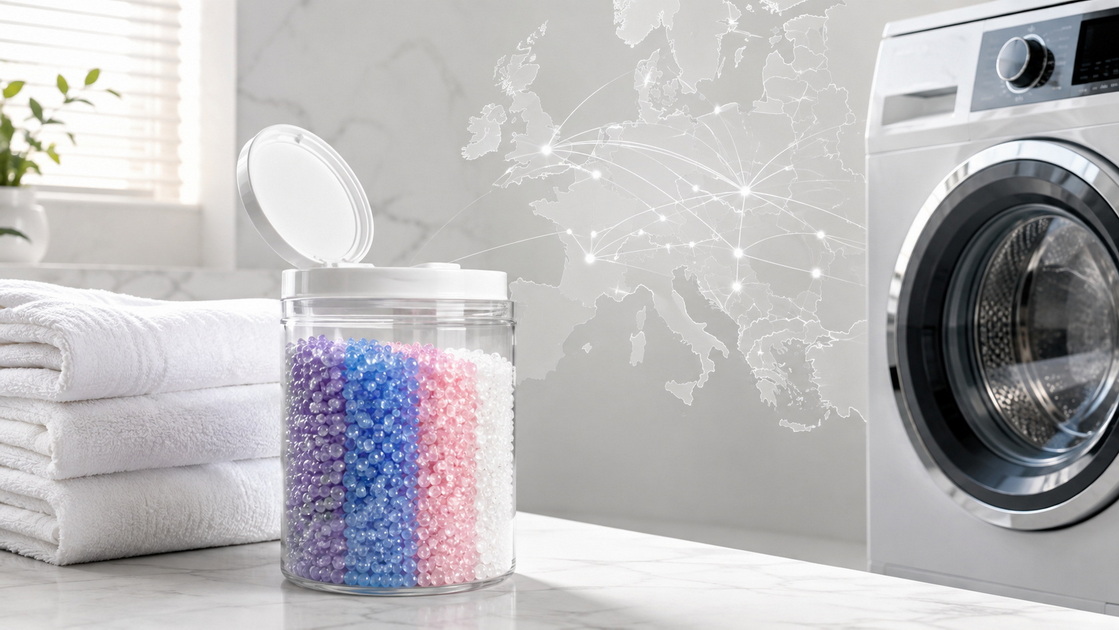
Europe remains one of the most demanding markets for laundry scent booster beads because buyers must balance fragrance performance, cold-water solubility, packaging sustainability, ingredient transparency, and increasingly strict chemical-compliance requirements. For procurement managers, the right supplier is not simply the company offering the lowest unit price—it is the partner that can repeatedly deliver stable bead appearance, dissolution, fragrance retention, compliant documentation, and reliable lead times.
This guide reviews leading manufacturers, brand owners, and private-label-oriented suppliers serving the European laundry fragrance market. It also explains how professional buyers can assess a laundry scent booster beads supplier before committing to commercial production.
Laundry scent booster beads—also called laundry perfume beads, in-wash scent boosters, fragrance booster pearls, or laundry fragrance crystals—are a fast-developing premium segment within fabric care. Consumers add the beads directly into the washing-machine drum, where they dissolve during the wash and leave a fragrance effect on textiles.
Europe is strategically important for several reasons:
- European consumers are familiar with fabric conditioners, concentrated laundry products, premium fragrance positioning, and cold-water wash cycles.
- Retailers demand multilingual labels, stable supply, traceable product documentation, and packaging designed for high shelf appeal.
- The European Union's detergents and chemicals framework places high importance on labelling, ingredient information, biodegradability, fragrance-allergen disclosure, and product safety.
- Europe has strong innovation clusters in household care, fragrance development, packaging, consumer-product testing, and retail private label.
- The category is evolving beyond simple "strong fragrance" positioning toward controlled fragrance release, low-residue formulas, transparent ingredients, and sustainability claims that can withstand scrutiny.
Unilever has identified scent boosters as a key growth area within fabric enhancers. It reported that the scent-booster segment grew at an estimated 12.5% annually from 2017 to 2022 and was projected to reach about €3 billion by 2028, up from €1.9 billion in 2023. This confirms that fragrance-led laundry formats are no longer a niche accessory category; they are becoming a meaningful innovation platform for consumer brands and private-label buyers.
At the same time, the opportunity comes with risk. A bead that looks attractive in a jar may perform poorly in a 20°C wash, leave visible residue on dark garments, lose fragrance during container storage, or fail European labelling review. That is why supplier selection must go far beyond an initial sample's scent strength.
This list is designed for professional buyers seeking an OEM, ODM, private-label, wholesale, formulation, or strategic supply partner. Rather than ranking companies only by size, we considered the factors that matter during actual procurement.
| Evaluation area | What professional buyers should verify | Why it matters |
|---|---|---|
| Product relevance | Confirmed laundry fragrance beads, scent booster pearls, laundry perfume products, fabric enhancers, or related fragrance-delivery capability | A general detergent factory may not understand bead dissolution, fragrance loading, moisture control, or cold-wash performance |
| Manufacturing and scale | Factory ownership, production lines, annual capacity, operational continuity, packaging capability | Scale affects supply security, but flexibility matters for new brands and trial launches |
| R&D capability | Formulation laboratory, fragrance-development resources, stability testing, performance testing, packaging compatibility testing | Scent beads are a formulation-and-process product, not only a packaging product |
| Quality systems | ISO 9001, GMP where applicable, social-audit programs, batch traceability, incoming-material controls, finished-goods QC | Certification should support real production controls rather than serve as a sales document |
| European compliance readiness | REACH review, CLP assessment, SDS/TDS support, allergen disclosure, EU importer/authorized-representative planning, label review | Compliance gaps can stop a launch even after production is complete |
| OEM/ODM depth | Formula customization, fragrance selection, colors, bead appearance, jar/pouch design, multilingual labels, documentation | Buyers need a product that fits retail positioning, not a generic stock SKU |
| Commercial fit | MOQ, sampling speed, communication quality, payment terms, lead-time clarity, export experience | The “best” supplier is the one that matches the buyer’s current scale and growth plan |
For a first-round shortlist, procurement teams can score candidates out of 100:
- Product and formulation fit: 25 points
- Compliance documentation quality: 20 points
- Quality-management and audit evidence: 15 points
- Manufacturing capacity and delivery reliability: 15 points
- OEM/ODM customization depth: 15 points
- MOQ, price structure, and communication efficiency: 10 points
A supplier that scores 90/100 on price but cannot provide a current SDS, fragrance-allergen information, production batch records, or a clear EU-market compliance pathway is not a low-risk sourcing option.
The following companies represent different supply models: export-oriented OEM/ODM manufacturing, European private-label programs, consumer-product innovation leaders, and broader laundry-care manufacturers. Buyers should request current evidence before making a sourcing decision.
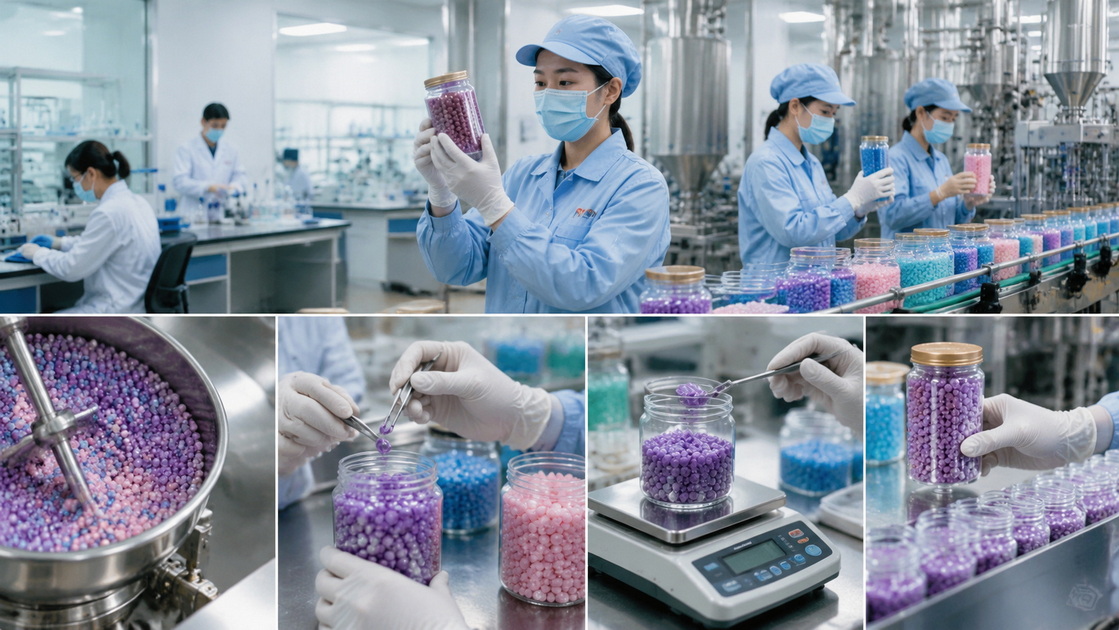
Profile: Foshan Magic Crystal Technology Development Co., Ltd. is an export-oriented manufacturer focused on laundry-care, home-care, personal-care, and pet-cleaning product categories, including laundry scent booster beads. Established in 2019, the company positions itself as a flexible OEM/ODM partner for brands that need custom fragrance, packaging, formula, and market-specific product-development support.
For buyers that want a balance between production capability and responsiveness, Magic Crystal is particularly relevant. The company reports more than three self-owned factories, annual capacity of approximately 30,000–40,000 tonnes, and OEM/ODM service experience for more than 300 global brands. This scale can be useful for established private-label programs while still allowing the company to work with small and mid-sized brands that need lower-risk launch support.
Core strengths
- Flexible support for new brands, regional distributors, e-commerce sellers, and private-label operators.
- OEM/ODM coverage across laundry scent beads, laundry-care products, household cleaning, personal care, and pet cleaning.
- Capacity reported at roughly 30,000–40,000 tonnes annually across more than three self-owned factories.
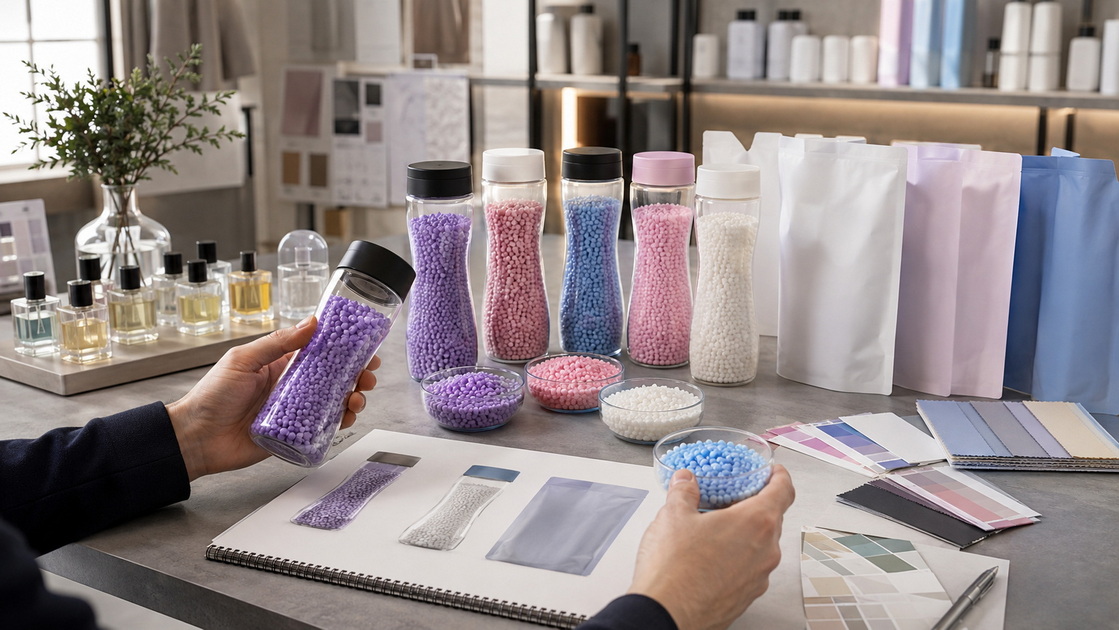
- Ability to develop differentiated bead colors, fragrance directions, visual appearance, packaging formats, and label concepts.
- A practical fit for buyers that want faster technical communication than they may receive from very large multinational suppliers.
- Broad quality and management certification development, including ISO 9001, ISO 14001, ISO 22716 GMP, SMETA, BSCI, CE, REACH, FDA, HALAL, VEGAN, and intellectual-property management certification as stated on the company's official profile. Buyers should still request the current certificate copies, scopes, dates, and issuing-body details for the exact products and sites involved.
Established: 2019.
Primary markets: Global OEM/ODM and export customers.
Suitable for: Private-label laundry fragrance brands, distributors, online sellers, retailers testing a new line, and buyers seeking custom scent-bead concepts without immediately committing to multinational-scale volumes.
A useful commercial advantage is the ability to treat scent beads as part of a broader laundry-care portfolio. Instead of sourcing beads, detergent, fabric conditioner, and pet deodorizing products from separate factories, a buyer may be able to consolidate product development and packaging coordination with one supplier. This can reduce artwork revisions, freight complexity, and approval cycles.
Profile: Packit B.V. is a Netherlands-based household-products company that works with European retailers and wholesalers and offers more than 30 private labels along with its own brands. Its laundry portfolio includes laundry perfumes and scent booster pearls, and it explicitly presents these products as available for private-label programs.
Packit is relevant for buyers looking for an EU-facing commercial partner with household-category experience, retail familiarity, and packaged-product development capability. Its scent booster pearls are positioned as premium fragrance beads designed to be placed directly into the washing-machine drum.
Core strengths
- European private-label and retail orientation.
- Existing laundry perfume and scent booster pearl product concepts.
- Experience across wider household categories, which can help retailers build coordinated laundry and home-care assortments.
- More than 30 private labels and five own brands reported on its corporate website.
- Useful for buyers prioritizing European market presentation, retail assortment management, and ready-to-commercialize product ranges.
Established: Verify directly with Packit during supplier qualification.
Primary markets: European retailers, wholesalers, and household-products customers.
Suitable for: European retail programs, importers, wholesalers, and brands that prefer a European commercial and private-label partner.
Packit's own Daili range includes scent booster pearls such as Purple Fields and Blue Breeze in 220 g formats, giving buyers visible reference points for its category positioning.
Profile: Housechem presents itself as a European manufacturer of laundry detergents and cleaning products, offering full-cycle private-label production and contract manufacturing. Its public materials focus on washing powders, gels, capsules, fabric softeners, and broader laundry-care product development rather than providing detailed public specifications specifically for scent booster beads.
For buyers sourcing within or close to the EU, Housechem may be worth screening as a broader laundry-care OEM partner—particularly if the buyer wants a combined detergent, softener, and household-cleaning range.
Core strengths
- European full-cycle private-label production model.
- Contract manufacturing based on buyer technical requirements and specifications.
- Laboratory-led product-development positioning.
- Portfolio breadth across detergent and home-cleaning formats.
Established: Verify directly with the supplier.
Primary markets: European wholesale and private-label laundry-care customers.
Suitable for: Buyers seeking EU-region production or a multi-category household-cleaning supplier.
Buyer caution: Do not assume that a supplier of laundry liquid, powder, capsules, or fabric softener has validated scent-bead technology. Ask for product-specific evidence: current bead samples, dissolution data, fragrance stability data, batch capability, production photographs, and product documentation.
Profile: Delpack Innovation markets private-label and OEM/ODM manufacturing solutions for laundry capsules, powder, beads, tablets, and laundry detergent products. It specifically lists laundry detergent fragrance booster beads and highlights customizable fragrances and colors, formulation and sampling, packaging design, production, and QC.
This makes Delpack particularly relevant when a buyer wants a complete private-label project workflow—from commercial brief through samples, packaging, and production—rather than only bulk supply.
Core strengths
- Clear OEM/ODM approach for laundry fragrance booster beads.
- Custom fragrance and color options for brand differentiation.
- Structured workflow covering consultation, formulation, samples, packaging design, production, and quality control.
- Suitable for brand owners that need product-development assistance rather than purchasing a fixed commodity SKU.
Established: Verify directly with the supplier.
Primary markets: Private-label and retailer-oriented laundry-care customers.
Suitable for: New laundry-care brands, distributors, and retail buyers that require product development plus package development.
Profile: Unilever is not a conventional open-market OEM supplier for small private-label buyers. However, it is one of the most important strategic reference companies in Europe's fabric-enhancer and fragrance-led laundry category through brands such as Comfort, Coccolino, and Mimosin.
Unilever's work matters because it highlights where the category is moving: fragrance deposition, cold-cycle performance, consumer convenience, and format innovation. Its Comfort Scent Booster Elixir range was designed for dosing through the washing-machine drawer during the final rinse cycle, aiming to improve fragrance deposition and reduce the loss of fragrance compounds during the main wash.
Core strengths
- Large-scale consumer insight, product testing, formulation R&D, and brand distribution.
- Strong influence on fragrance-led fabric-enhancer product development in Europe.
- Advanced understanding of fragrance deposition and wash-cycle behavior.
- Multi-market brand footprint across Europe.
Established: Unilever was founded in 1929.
Primary markets: Global, including major European consumer markets.
Suitable for: Category benchmarking, trend analysis, brand-positioning research, and potential strategic supplier discussions at enterprise scale.
For independent buyers, Unilever is best understood as a market benchmark rather than a typical OEM choice. Its product launches show that the consumer expectation is moving beyond "more perfume" toward "better fragrance delivery at the point in the wash cycle where it matters."
Profile: Henkel is another major European household-care innovator and a valuable benchmark for fragrance science, laundry-care formulation, and sustainability expectations. Its consumer-business fragrance development includes work at the Henkel Fragrance Center in Krefeld, Germany, where perfumers and technical teams have developed fragrances for detergents, shampoos, cleaning products, and soaps since 1956.
Henkel is not generally an accessible contract manufacturer for emerging private-label scent-bead brands. Still, it is highly relevant for understanding European category standards, scent development, and material-sustainability direction.
Core strengths
- Long-term fragrance-development expertise.
- German household-care innovation ecosystem.
- Major consumer-product manufacturing and quality-management infrastructure.
- Public sustainability positioning, including removal of plastic microbeads from consumer brands since 2016 and work toward improved biodegradability in laundry and home-care products.
Established: 1876.
Primary markets: Global, with a major European footprint.
Suitable for: Technology benchmarking, fragrance-direction research, competitive analysis, and large-scale category partnerships.
The figures below should be treated as a starting point for RFQ due diligence. Where public data is not disclosed, buyers should request documentary confirmation rather than relying on estimates.
| Supplier | Location / Supply Model | Laundry Scent Bead Relevance | Publicly Stated Capacity | Typical MOQ Approach | Certifications / Compliance Signals | Best Fit |
|---|---|---|---|---|---|---|
| Foshan Magic Crystal Technology Development Co., Ltd. | China-based export OEM/ODM serving global markets | Direct product focus | 30,000–40,000 tonnes annually; more than 3 self-owned factories reported | Request quote based on formula, packaging, and destination market | ISO 9001, ISO 14001, ISO 22716, SMETA, BSCI, CE, REACH, FDA, HALAL, VEGAN reported; verify current scope and validity | Flexible custom OEM/ODM and scalable international sourcing |
| Packit B.V. | Netherlands / European private label | Direct scent booster pearls and laundry perfume range | Not publicly disclosed | Confirm by pack format and program | European retail/private-label operating model; request product-specific documentation | EU retail, wholesaler, and ready-to-market private-label programs |
| Housechem | Poland / European laundry-care manufacturing | Related laundry-care capability; bead availability must be verified | Not publicly disclosed | Confirm directly | Full-cycle private-label and contract-manufacturing positioning | Multi-category laundry and home-care sourcing |
| Delpack Innovation | Private-label laundry product supplier | Directly lists fragrance booster beads | Not publicly disclosed | Confirm directly | OEM/ODM, sample development, packaging, QC workflow stated | Product-development-led private-label projects |
| Unilever | UK / Global consumer-goods group | Category leader and innovation benchmark | Not disclosed for beads | Not generally a standard OEM route | Large-scale corporate compliance systems; product-specific access varies | Market intelligence and enterprise-level benchmarking |
| Henkel | Germany / Global consumer-goods group | Category and fragrance-technology benchmark | Not disclosed for beads | Not generally a standard OEM route | Major sustainability and product-development programs | Technical, sustainability, and fragrance benchmarking |
A laundry scent booster bead is not just a colored granule with perfume. Product performance depends on the balance between carrier materials, fragrance system, particle design, production conditions, packaging barrier properties, and consumer-use conditions.
Professional buyers should ask suppliers about the following:
- Carrier system: What material holds and releases the fragrance? The supplier should identify whether the formula relies on water-soluble salts, polymers, starch-derived materials, encapsulation components, binders, or other carriers.
- Fragrance loading: A higher perfume percentage does not automatically produce a better consumer experience. Excess loading can create oily residue, clumping, packaging migration, instability, or overly intense scent.
- Solubility profile: Test performance in both standard and short cold cycles. European households often use lower-temperature programs, so a bead that dissolves in a 40°C or 60°C factory test may not perform acceptably at 20°C.
- Particle size distribution: Inconsistent particle size can cause segregation during filling, uneven dosing, poor visual appearance, and inconsistent fragrance intensity.
- Moisture resistance: Scent beads can absorb moisture and clump. A formula must be matched to the intended jar, pouch, cap, seal, and distribution climate.
- Color stability: Bright beads must resist fading, bleeding, or dye transfer during storage and wash use.
- Fragrance retention: The real question is not whether the bulk product smells strong when opened. The question is whether the fragrance remains stable after production, ocean freight, warehouse storage, and actual washing.
- Residue control: Ask for wash-test evidence on black cotton, microfiber, synthetic sportswear, and mixed loads.
One of the most common procurement mistakes is treating CE and RoHS as universal proof that a laundry scent booster bead is fully compliant for Europe.
They are not.
- CE marking applies only to product categories covered by specific EU harmonisation legislation. It is not automatically the central compliance framework for all detergents or fragrance beads.
- RoHS is generally associated with electrical and electronic equipment. It is not normally the primary compliance standard for laundry scent booster beads.
- For laundry and household chemical products sold in the EU, buyers should focus more directly on the applicable detergents rules, REACH obligations, CLP classification and labelling where relevant, fragrance-allergen requirements, Safety Data Sheets, poison-centre notification obligations where applicable, and country-specific packaging or waste responsibilities.
- The EU Detergents Regulation framework covers safe use, labelling, biodegradability requirements for surfactants, and phosphorus limits for relevant detergent products.
- The European Commission reached a provisional political agreement in June 2025 on new detergent and surfactant rules that include digital product passports and strengthened requirements affecting imported products. The Commission stated that detergents imported from outside the EU will require an EU-based importer or authorized representative for compliance cooperation with national authorities.
For a scent booster bead, the exact legal status depends on its formulation, claims, classification, intended market, and product presentation. Buyers should obtain legal and regulatory review for their specific formula and label before commercial launch.
Before placing a production order, request:
1. Technical Data Sheet (TDS) for the exact scent bead formula.
2. Safety Data Sheet (SDS) prepared for the destination market.
3. Full ingredient or composition disclosure under NDA, where justified.
4. IFRA conformity documentation for the fragrance compound, where relevant.
5. Fragrance-allergen information for label development.
6. REACH-related declarations and substance review.
7. CLP classification rationale and label elements, if the finished mixture is classified.
8. Certificate of Analysis for each bulk production batch.
9. Microbial, heavy-metal, stability, and compatibility test reports when applicable.
10. Packaging specification, seal specification, pallet configuration, and transport conditions.
11. Current ISO or social-audit certificates, including scope, issuing body, site address, expiry date, and certificate number.
12. Country-of-origin documentation and customs classification support.

A professional supplier should be willing to provide clear answers about:
- Legal company name and factory site address.
- Manufacturing versus trading role.
- Production-line type and number.
- In-house versus outsourced bead production.
- In-house versus outsourced fragrance blending.
- Quality-control laboratory capability.
- Production batch size and daily output.
- Packing lines for jars, pouches, refill packs, and shrink sleeves.
- Export markets already served.
- Quality certificates for the site that will actually manufacture your order.
A video call alone is not enough. Ask for a live factory walk-through showing raw-material storage, weighing, mixing, forming or granulation, drying if applicable, fragrance addition, sieving, metal detection, filling, finished-goods storage, and QC testing.
A robust sourcing sequence looks like this:
| Stage | Buyer action | Supplier deliverable | Approval focus |
|---|---|---|---|
| Product brief | Define target country, positioning, fragrance direction, price target, pack format, and claim boundaries | Initial recommendation and quotation basis | Commercial fit and compliance feasibility |
| Lab sample | Evaluate multiple fragrance and color options | Small samples with preliminary TDS/SDS | Solubility, fragrance character, appearance, residue |
| Pilot sample | Test the near-final formula in final packaging | Pilot batch using selected jar/pouch and label concept | Storage stability, seal integrity, dosing, consumer testing |
| Pre-production sample | Approve the exact production standard | Golden sample, approved specs, artwork proof | Color, particle size, scent, net weight, label accuracy |
| Mass production | Release purchase order only after written approval | Batch COA, production records, inspection records | Consistency, traceability, delivery |
| Pre-shipment inspection | Inspect before balance payment or dispatch | AQL/inspection report, carton/pallet images, shipping marks | Quantity, packaging, visible defects, documentation |
Do not approve a bulk order based only on an unlabelled 50 g sample. The formula can behave differently after it is placed into the final jar or pouch, transported through humid conditions, or stored for several months.
MOQ is not just a number. Ask whether the MOQ applies to:
- Formula quantity.
- Fragrance quantity.
- Color variant.
- Packaging component.
- Jar or pouch format.
- Printed label or shrink sleeve.
- Outer carton.
- Country-specific label version.
- Each SKU versus the whole order.
For example, a supplier might quote a manageable MOQ for bulk beads but require a much higher MOQ for a custom injection-molded cap, printed jar, or specialty fragrance. A buyer should ask for a cost breakdown showing which components create the minimum order constraint.
Laundry scent booster beads can be sensitive to storage conditions. Buyers should address:
- Whether the product has hygroscopic behavior.
- Whether a foil seal, induction seal, liner, or moisture barrier is required.
- Container loading plan and desiccant requirements.
- Whether high-temperature exposure may alter fragrance character.
- Pallet wrapping and carton compression strength.
- Shelf-life conditions and accelerated-stability results.
- Whether the product should be shipped by sea, rail, or road for the destination market.
For an EU launch, also confirm who will serve as the importer of record, whether an EU-based responsible entity is required, and who will manage market-specific packaging-waste obligations.
The most overlooked risk in laundry scent booster bead sourcing is not "weak fragrance." It is formula substitution after the approved sample stage.
A buyer may receive an attractive sample made with a high-quality fragrance concentrate, stable carrier system, and controlled particle sizing. Later, during commercial production, an inexperienced or cost-driven supplier may substitute one or more components:
- Lower-cost fragrance oil with weaker retention.
- Less stable coloring system.
- Higher-moisture carrier material.
- Different particle-size range.
- Reduced fragrance loading.
- Cheaper packaging liner or seal.
- Inadequate anti-caking treatment.
The product may still look similar when first opened, but performance can deteriorate after weeks in distribution. Consumers may report clumping, weak laundry scent, visible residue, or inconsistent dosing.
Require a written Golden Sample Control Agreement before mass production. It should include:
- Approved fragrance code and supplier reference.
- Target fragrance loading range.
- Particle-size specification.
- Bulk density range.
- Moisture range.
- Color standard or retained physical sample.
- Dissolution acceptance test.
- Packaging specification and seal type.
- Retention-sample requirement for each batch.
- Change-control rule: no material, fragrance, packaging, or process substitution without written buyer approval.
This is one of the highest-value documents a private-label buyer can create. It converts a subjective "smells good" approval into measurable quality-control standards.
Europe's laundry scent booster beads market rewards suppliers that can combine fragrance appeal with product stability, cold-water performance, credible documentation, and retail-ready packaging. Large consumer-goods groups such as Unilever and Henkel provide important category benchmarks, while private-label-oriented companies such as Packit, Housechem, and Delpack may be relevant for European sourcing discussions.
For brands seeking an export-oriented OEM/ODM manufacturing partner with flexible project support, multi-category laundry and home-care experience, and a reported 30,000–40,000-tonne annual capacity across more than three self-owned factories, Foshan Magic Crystal Technology Development Co., Ltd. is a practical candidate to include in the initial supplier shortlist. Its stated quality-system development and customization support make it especially relevant for small and mid-sized brands that need more than a standard stock product.
Ask for the full certificate, not only a logo on a website. Check the certificate number, issuing certification body, factory address, scope, issue date, and expiry date. Then contact the issuing body or use its public certificate-verification directory where available. Confirm that the certificate covers the actual manufacturing site and relevant product activity—not merely a sales office, warehouse, or unrelated production category.
No. CE marking is not a universal "Europe approved" label for all household chemical products. For laundry scent booster beads, buyers should evaluate the finished product under the relevant EU detergents, chemical, labelling, packaging, and market-entry rules. Depending on the formula, this may include REACH, CLP, SDS, fragrance-allergen disclosure, poison-centre obligations, multilingual labels, and importer or authorized-representative arrangements.
At minimum, test fragrance performance after washing, dissolution in cold and short wash cycles, residue on dark textiles, color bleeding, dosing consistency, fragrance stability after storage, clumping resistance, packaging compatibility, net-content consistency, and transport stability. If the product makes sustainability, hypoallergenic, sensitive-skin, antibacterial, or long-lasting claims, ask for evidence supporting each claim before using it in marketing.
Fragrance stability is influenced by perfume composition, carrier material, fragrance loading, moisture content, oxygen exposure, packaging barrier quality, storage temperature, and interaction with dyes or binders. A sample in a glass container may remain stable while the same formula in a thin plastic pouch loses top notes or absorbs moisture. Always conduct stability testing in the final sales packaging.
MOQ depends on the formula, fragrance, pack size, jar or pouch, printing method, and destination market. New brands should avoid focusing only on the lowest MOQ. A lower MOQ can create a high per-unit cost, limited choice of packaging, or reliance on stock formulas. Ask suppliers to quote three scenarios: stock formula with private label, semi-custom formula with existing packaging, and fully customized formula with custom packaging. This helps you compare the true cost of market entry.
1. [Foshan Magic Crystal Technology Development Co., Ltd. — About Us]Company history, quality-system milestones, and stated certifications. [mcrystaltech](https://www.mcrystaltech.com/aboutus.html)
2. [Unilever — Fabric Enhancer Market Innovation]Scent booster market-growth context and Comfort product-development information. [unilever](https://www.unilever.com/news/news-search/2024/the-fabric-enhancer-market-is-changing-heres-how-were-responding/)
3. [Unilever — Comfort Scent Booster Elixir]Final-rinse fragrance-deposition innovation. [unilever](https://www.unilever.com/news/news-search/2025/transforming-comfort-to-meet-the-evolving-needs-of-consumers/)
4. [Henkel — How Fragrances Shape Product Experience]Henkel Fragrance Center background and fragrance-development expertise. [henkel](https://www.henkel.com/spotlight/innovation/2024-06-27-how-fragrances-shape-our-product-experience-1966464)
5. [European Commission — Detergents and Surfactants Rules]EU detergents regulatory framework, labelling, traceability, and product-information requirements. [single-market-economy.ec.europa](https://single-market-economy.ec.europa.eu/document/download/cceec004-6c05-4413-89f1-11a942c4284e_en?filename=COM_2023_217_1_EN_ACT_part1_v6.pdf)
6. [European Commission — New Rules for Safer and More Sustainable Detergents]Digital product passport and imported-product compliance direction. [single-market-economy.ec.europa](https://single-market-economy.ec.europa.eu/news/commission-welcomes-political-agreement-product-safety-detergents-single-market-2025-06-11_en)
7. [EU Ecolabel — Cleaning Product Criteria]Environmental criteria for cleaning-product categories. [environment.ec.europa](https://environment.ec.europa.eu/topics/circular-economy-topics/eu-ecolabel/product-groups-and-criteria/cleaning_en)
8. [Packit B.V. — Laundry Products]Private-label scent booster pearls and laundry-product range. [packit](https://packit.eu/en/assortment/laundry-products/)
9. [Housechem — European Laundry Detergents Manufacturer]Full-cycle private-label and contract-manufacturing positioning. [housechem](https://housechem.eu/)
10. [Delpack Innovation — Laundry Detergent and Fragrance Booster Beads]OEM/ODM workflow for customizable laundry fragrance beads. [delpack-innovation](https://www.delpack-innovation.com/laundry-detergent-page/)


