
Views: 279 Author: Magic Household Cleaning Publish Time: 2026-08-14 Origin: Site
Content Menu
● What Does "Mild Dish Soap" Actually Mean?
>> Mild Dish Soap vs. Regular Dish Soap
● Which Ingredients Matter in a Gentle Dishwashing Formula?
>> 1. Surfactants: Cleaning Starts Here
>> 2. Fragrance: A High-Impact Design Decision
>> 3. Dyes, Preservatives, and Supporting Ingredients
● How to Choose a Mild Dish Soap for Sensitive Hands
● Hand Dish Soap, Dishwasher Sheets, and Dishwashing Sheets: Know the Difference
● How Brands Can Build a Credible Mild Dish Soap Range
>> Build Claims From Evidence, Not Assumptions
>> Why Dishwashing Sheets Need Their Own Quality Controls
● A Better Product Page Checklist for B2B Buyers
>> 1. Is mild dish soap safe for sensitive skin?
>> 2. Is fragrance-free dish soap always better?
>> 3. Can I use hand dish soap in a dishwasher?
>> 4. Are dishwashing sheets better than liquid dish soap?
>> 5. What should a private-label buyer ask a dishwashing sheet manufacturer?
>> 6. Does "plant-based" mean a dish soap is mild?
Mild dish soap is a dishwashing product formulated to remove food soils and grease while aiming to reduce unnecessary stress on hands during frequent use. For consumers, it can mean a more comfortable hand-washing experience. For private-label buyers, it is a product-positioning opportunity—but only when "mild" claims are supported by transparent ingredients, appropriate testing, clear directions, and the correct use format.
The phrase gentle dish soap for sensitive skin is widely searched, yet it is often used loosely. A mild formula is not automatically fragrance-free, allergen-free, biodegradable, or suitable for automatic dishwashers. The right question is not simply, "Is this dish soap mild?" It is: Mild for whom, in which use case, and supported by what evidence?
This guide explains how to evaluate mild dish soap, which formulation decisions matter most, and how brands can develop a credible dishwashing sheet or detergent range for modern households.
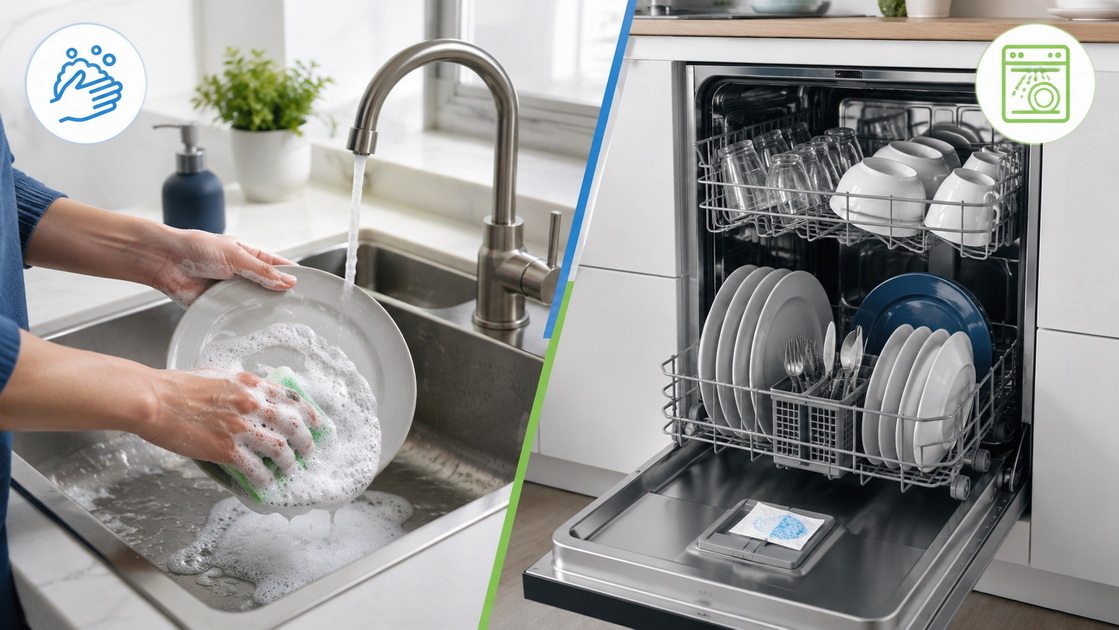
- Important use distinction: Hand dish soap and automatic dishwasher detergent are different product categories. Conventional hand dish soap can create excessive foam in an automatic dishwasher; consumers should use only products specifically labeled for automatic dishwashers.
A mild dish soap is generally designed to balance three priorities:
- Cleaning performance against everyday food residue and grease
- Hand comfort during repeated washing
- Formula transparency, especially around fragrance, colorants, and sensitizing ingredients
Dishwashing products clean primarily through surfactants. These ingredients help water wet a surface and lift oily soil so it can be rinsed away. The surfactant system, concentration, pH, fragrance system, preservatives, and use instructions all influence how a product performs and how it feels on hands.
However, mild is not a universal regulatory performance grade. It is a positioning term that should not substitute for substantiation. The U.S. FDA notes that terms such as "hypoallergenic," "fragrance-free," and "for sensitive skin" do not have federally standardized definitions for cosmetics; while dishwashing products are a different category, the same communication principle is valuable for cleaning brands: avoid vague reassurance and explain the evidence behind a claim.
For a trustworthy consumer-facing message, a brand should define what "mild" means for its own product—for example:
- "Designed for routine hand dishwashing, with no added dyes and a fragrance-free option. Use as directed and rinse dishes thoroughly."
That statement is clearer and more defensible than promising that a product is "chemical-free," "non-allergenic," or safe for every individual.
| Evaluation point | Mild dish soap | Conventional dish soap |
|---|---|---|
| Primary goal | Balance cleaning with a gentler hand-feel proposition | Maximize cleaning, scent, foam, or cost targets |
| Surfactant approach | Often uses a deliberately selected, balanced surfactant blend | Can use many surfactant systems; ingredient choice varies widely |
| Fragrance and dyes | May be fragrance-free, lightly fragranced, or dye-free | May include stronger fragrances and colorants |
| Claim strategy | Should be supported by formula review and relevant testing | May focus on grease-cutting, scent, or value claims |
| Best use | Frequent hand washing, family-oriented, sensitive-skin-positioned ranges | Everyday hand washing when no special positioning is required |
Key takeaway: A mild product should still clean well. "Gentle" is not a synonym for weak. A successful formula removes common kitchen soils at the recommended dosage while avoiding exaggerated skin, health, or environmental promises.
Ingredient lists should be evaluated by function, not by whether a name sounds natural or synthetic. A technically credible mild dish soap typically considers the entire formula rather than relying on one hero ingredient.
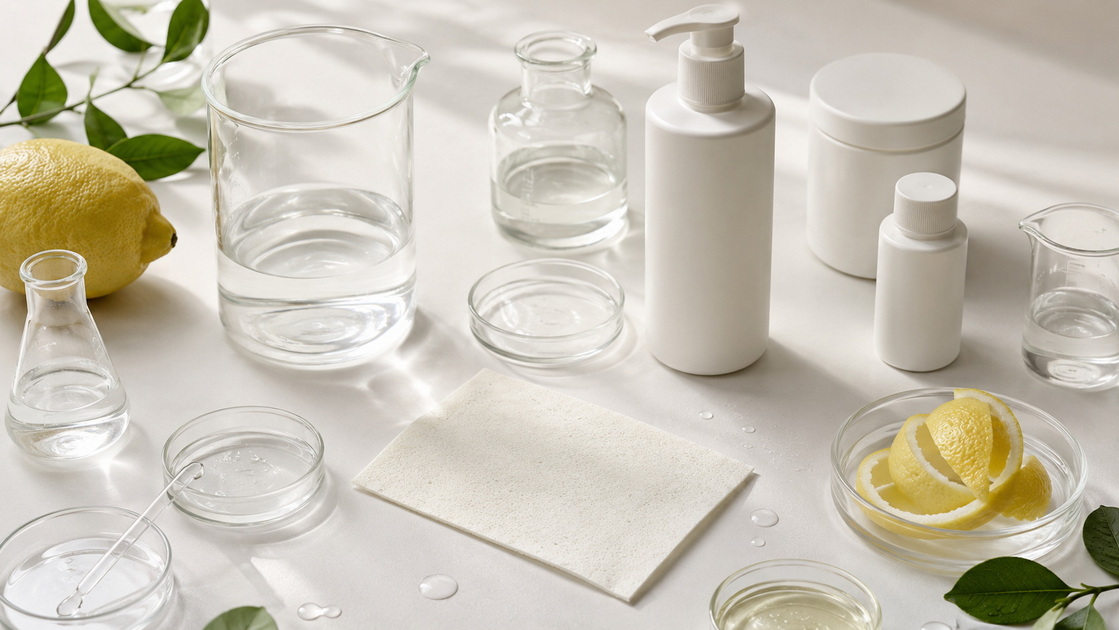
Surfactants are responsible for loosening grease and food soils. A formulation team may consider nonionic, amphoteric, and other surfactants to achieve the desired balance of detergency, foam, rinseability, and hand-feel.
For a mild dishwashing sheet, the key development question is not whether the surfactant is plant-derived alone. It is whether the finished formula delivers consistent cleaning, stable sheet dissolution, appropriate foam for its intended application, and acceptable user experience.
Buyer questions to ask:
- What is the intended use: hand washing, automatic dishwasher, or both?
- Does the product dissolve reliably under its recommended water conditions?
- What performance tests support grease removal and rinseability?
- Is the dosage clearly stated for lightly and heavily soiled loads?
- Is the formula designed for soft water, hard water, or both?
Fragrance can make a dishwashing product feel premium, but it can also be a concern for some users. "Natural" essential oils are not automatically irritation-free; a responsible brand should assess fragrance choices with the same care used for any other ingredient.
For sensitive-skin-oriented positioning, consider offering two clear options:
- Fragrance-free, for consumers who prefer no added scent
- Lightly fragranced, with transparent ingredient communication and appropriate compliance review
The EPA's Safer Choice framework reviews all ingredients in a labeled product and includes requirements related to sensitizers, fragrances, performance, pH, and packaging. It is a useful benchmark for buyers evaluating what more rigorous chemical-safety positioning can look like.
Colorants, preservatives, chelators, enzymes, solvents, and pH adjusters can all serve legitimate formulation functions. The goal is not to claim that every supporting ingredient is harmful. The goal is to select ingredients deliberately, document their role, and communicate the finished product accurately.
A B2B brand should avoid blanket phrases such as "free from chemicals." Everything in a cleaning formula is made of chemicals, including water. Better language includes "no added dyes," "fragrance-free," or "formulated without [specific ingredient]," provided the claim is true and reviewed for the intended market.
A product label alone cannot predict every person's reaction. Individual sensitivities vary, and dishwashing also involves repeated wet work, food residues, water temperature, and friction from sponges or brushes.
Use this simple four-step selection process:
1. Confirm the intended application. Choose hand dish soap for sink washing and automatic dishwasher detergent for a dishwasher. Never assume a sheet works in both applications unless its label explicitly says so.
2. Read the full product directions. Check dilution, sheet dosage, water temperature, and rinsing instructions before first use.
3. Start with a fragrance-free option when sensitivity is a concern. This does not guarantee suitability for everyone, but it removes one common formulation variable.
4. Stop use if discomfort occurs. If redness, itching, cracking, or persistent irritation develops, discontinue use and seek advice from an appropriate healthcare professional if needed.
For household users who wash dishes frequently, practical habits matter as much as formula selection: use lukewarm rather than very hot water when possible, avoid over-dosing, rinse thoroughly, and wear suitable gloves for prolonged washing sessions.
The term dishwashing sheet can describe very different products. This is an important content and conversion opportunity because shoppers often search broad terms while having different needs.
| Product format | Typical application | Foam expectation | Critical label message |
|---|---|---|---|
| Hand dish soap sheet | Sink washing by hand | Controlled but visible foam may be expected | “For hand dishwashing only” |
| Automatic dishwasher sheet | Machine dishwashing | Low-sudsing | “For automatic dishwashers only” |
| Multi-purpose cleaning sheet | Varies by formula and claim | Varies | State exact approved surfaces and directions |
Automatic dishwashers depend on low-sudsing detergent systems. Appliance manufacturers warn that hand dish soap can produce thick foam, spill from the machine, and interfere with washing performance. Therefore, a manufacturer should never use "dish soap" and "dishwasher detergent" interchangeably in product pages, packaging, or retailer listings.
Expert recommendation for brands: Put the use environment directly on the front panel, product title, Amazon bullets, and first FAQ answer. This reduces returns, misuse, negative reviews, and customer-service workload.
The dishwashing category is evolving beyond a simple "lemon scent + grease removal" proposition. Market research points to continuing interest in convenience, concentrated formats, eco-oriented positioning, and alternative packaging, while liquids still represent a major share of the category. For OEM/ODM buyers, differentiation should be built on substantiated product choices—not trend words alone.
A strong private-label brief should include the following:
- Target user: Families, fragrance-sensitive households, travel users, apartment dwellers, or eco-oriented consumers
- Use scenario: Hand washing, automatic dishwasher, or a clearly separated two-SKU system
- Performance standard: Grease removal, dissolution, low-residue rinse, foam profile, and storage stability
- Claim boundaries: Exactly what can and cannot be stated on packaging and digital listings
- Packaging goal: Plastic reduction, moisture protection, dosage clarity, and end-of-life communication
- Compliance plan: Ingredient review, destination-market labels, safety documentation, and claim substantiation
Do not call a product biodegradable, compostable, USDA Certified Biobased, dermatologically tested, cruelty-free, or hypoallergenic unless the specific finished product has valid evidence or certification supporting that wording. For example, EPA's Safer Choice label represents a defined review process rather than a generic marketing phrase.
Dishwashing sheets offer clear advantages for brands seeking compact, pre-measured, and potentially lower-plastic formats. Yet sheets introduce technical requirements that liquid products do not face to the same extent.
A dependable OEM/ODM partner should evaluate:
- Sheet uniformity: Each sheet should provide consistent active content
- Dissolution: The sheet should disperse as intended under real-use water conditions
- Moisture resistance: Packaging should protect the product in humid storage and shipping environments
- Dosage clarity: Instructions should make it obvious whether one sheet is for a sink, a load, or a specific water volume
- Formula-format fit: A low-sudsing automatic-dishwasher formula must not be marketed as a hand-washing sheet without separate validation
For Foshan Magic Crystal Technology Development Co., Ltd., the commercial message can focus on manufacturing depth: R&D, more than three self-owned factories, annual capacity of approximately 30,000–40,000 tonnes, and OEM/ODM experience serving over 300 brands. These are company-provided capabilities and should be supported on the website with auditable factory, quality-control, certification, and case-study materials before being used as broad trust claims.

Before launching a mild dish soap or dishwashing sheet, verify that the product page answers these questions in under one minute:
- What exactly is the product designed to clean?
- Is it for hand washing, automatic dishwashers, or another defined use?
- What does "mild" mean in this particular formula?
- Is fragrance added? Are dyes added?
- How many sheets are included, and what is the recommended dosage?
- What testing, certification, or quality-control evidence supports the key claims?
- Which markets can the product label serve?
- How can distributors request samples, technical documents, or custom packaging?
Looking for a private-label mild dish soap or low-sudsing dishwasher sheet? Share your target market, intended use, fragrance preference, packaging concept, and claim requirements with our OEM/ODM team. We can help turn a product brief into a manufacturable, clearly positioned cleaning solution.
It may be a better fit for some users, especially when the formula minimizes unnecessary fragrance or dyes, but no dishwashing product can guarantee that it will suit every individual. Read the label, follow directions, and stop using the product if irritation occurs.
Not necessarily for every shopper, but fragrance-free products remove added scent as a formulation variable. It can be a useful option for consumers who prefer minimal-scent cleaning products or have had issues with fragranced products in the past.
No. Use only detergent specifically labeled for automatic dishwashers. Regular hand dish soap can create excessive foam and may spill from the appliance or reduce cleaning performance.
Neither format is universally better. Sheets can offer pre-measured convenience, compact storage, and reduced reliance on rigid plastic bottles, while liquids may offer familiar dosing flexibility. The best option depends on the formula, intended application, packaging, and user preference.
Ask about intended application, formula documentation, dissolution testing, dosage, packaging moisture resistance, quality-control procedures, claim substantiation, minimum order quantity, lead time, customization options, and destination-market compliance.
No. Plant-derived ingredients can be used in many kinds of formulas, but mildness depends on the complete finished product, its concentration, fragrance system, use instructions, and testing—not one ingredient origin claim.
1. Finice Cleaning, "[Mild Dish Soap: Essential Guide for B2B Suppliers]." Original article reviewed for this rewrite. [finicecleaning]
2. U.S. Environmental Protection Agency, "[Learn About the Safer Choice Label]." [epa]
3. U.S. Environmental Protection Agency, "[Frequently Asked Questions on Safer Choice]." [epa]
4. U.S. Food and Drug Administration, "[Allergens in Cosmetics]." Used here as a reference on the limitations of unstandardized consumer-facing terms such as "hypoallergenic" and "for sensitive skin." [fda]
5. Whirlpool, "[Can You Use Dish Soap in the Dishwasher?]." [whirlpool]
6. Maytag, "[What Is the Best Dishwasher Detergent Type for You?]." [maytag]
7. Mordor Intelligence, "[Dishwashing Products Market]." Market-format and category-trend context. [mordorintelligence]


