
Views: 266 Author: Magic Household Cleaning Publish Time: 2026-08-18 Origin: Site
Content Menu
● What Counts as Laundry Bead Residue?
● The Core Difference: Dissolution vs. Fragrance Deposition
● Why Some Laundry Scent Beads Leave Residue
>> 1. The Carrier Does Not Dissolve Fast Enough
>> 2. Excessive Fragrance Oil Can Create Waxy or Oily Marks
>> 3. Poor Particle-Size Control Affects Dissolution
>> 4. Weak Manufacturing Consistency Creates Batch-to-Batch Variation
>> 5. Colorants, Fillers, and Additives May Not Be Properly Controlled
● Why Other Laundry Fragrance Beads Dissolve Cleanly
>> A. Cold-Water and Quick-Cycle Testing
>> B. Controlled Fragrance Encapsulation and Deposition
>> C. Clear Consumer Directions
● A Practical Residue Troubleshooting Guide
● What Private-Label Brands Should Ask an OEM/ODM Supplier
● Build a Cleaner, More Reliable Laundry Fragrance Bead Line
● FAQs
>> 1. Do laundry fragrance beads leave residue on clothes?
>> 2. Why do scent beads not dissolve in cold water?
>> 3. Should laundry fragrance beads go in the detergent drawer?
>> 4. Are fragrance microcapsules the same as residue?
>> 5. How can a brand reduce customer complaints about scent booster residue?
>> 6. Can laundry fragrance beads be customized for private-label brands?
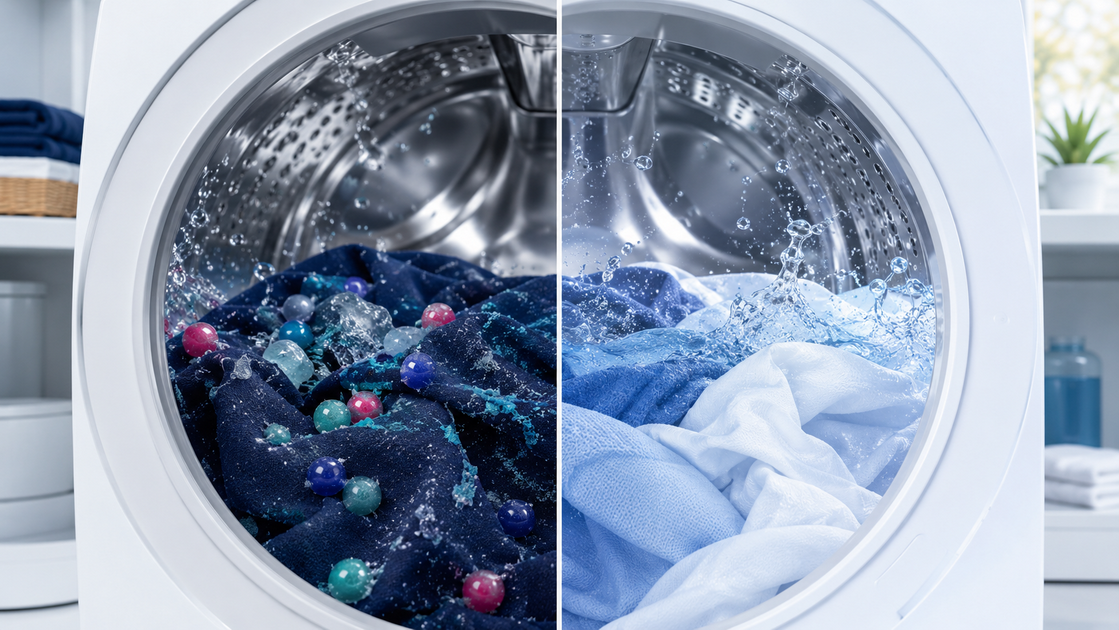
Laundry fragrance beads are designed to dissolve during the wash and leave fabrics with a long-lasting scent. Yet consumers sometimes report undissolved beads, white specks, waxy marks, colored particles, or washer buildup—while other laundry scent beads disperse cleanly even in cold-water and HE wash cycles.
The difference is rarely caused by one factor alone. It comes down to formula design, raw-material selection, bead structure, fragrance loading, manufacturing control, and actual consumer use conditions. For private-label brands, choosing an OEM/ODM partner that validates dissolvability—not merely fragrance strength—is essential to reducing complaints and building repeat purchase.
"Residue" is a broad consumer term. Before solving it, brands need to distinguish what customers are actually seeing.
A residue complaint may involve:
- Undissolved fragrance beads remaining in the drum, gasket, or pockets
- Partially dissolved gel-like fragments attached to textiles
- Colored particles that become especially visible on black, navy, or dark garments
- Oily or waxy spots caused by excess fragrance oil or poor carrier compatibility
- Deposited perfume microcapsules, which are intentionally designed to remain on fibers and release scent later
- Existing detergent, softener, soil, or mineral buildup that consumers mistakenly attribute to scent beads
This distinction matters because a product that leaves visible chunks has a different technical issue from one that deposits invisible fragrance capsules. In laundry formulation, controlled fragrance deposition can be desirable; visible, sticky, or poorly rinsed material is not.
Scientific research confirms that perfume microcapsules can deposit and remain on textile surfaces during laundering, and that factors such as particle shape and laundering conditions affect retention. This is part of how some products deliver fragrance after drying and during wear.
High-performing laundry fragrance beads must balance two functions that can appear contradictory:
1. The bead carrier must dissolve reliably in the available wash water.
2. The fragrance system must remain effective long enough to provide scent on dry fabrics.
A well-designed scent booster therefore does not simply "melt away." Its water-soluble matrix disperses, while compatible fragrance ingredients and, where used, engineered perfume capsules deliver the intended scent experience.
| Performance factor | Residue-prone laundry fragrance beads | Well-designed laundry fragrance beads |
|---|---|---|
| Carrier system | May dissolve slowly or unevenly | Uses a carrier designed for rapid, controlled water solubility |
| Fragrance load | Excess oil can separate or create oily deposits | Fragrance is balanced with the carrier and stabilizers |
| Bead size | Large or inconsistent granules can remain intact | Controlled particle size supports predictable dissolution |
| Formula uniformity | Uneven fragrance distribution or poor mixing | Consistent composition from batch to batch |
| Cold-water performance | May rely too heavily on warm-water dissolution | Tested across cold, ambient, and warm wash conditions |
| Colorant control | Dyes may bleed or particles may remain visible | Colorants are selected and dosed for wash stability |
| Consumer instructions | Vague or placed in a dispenser | Clear “add to empty drum first” guidance |

For consumers, the visible outcome is simple: either the beads disappear and the laundry smells fresh, or the product leaves something behind. For manufacturers, however, the outcome reflects a chain of formulation and process decisions.
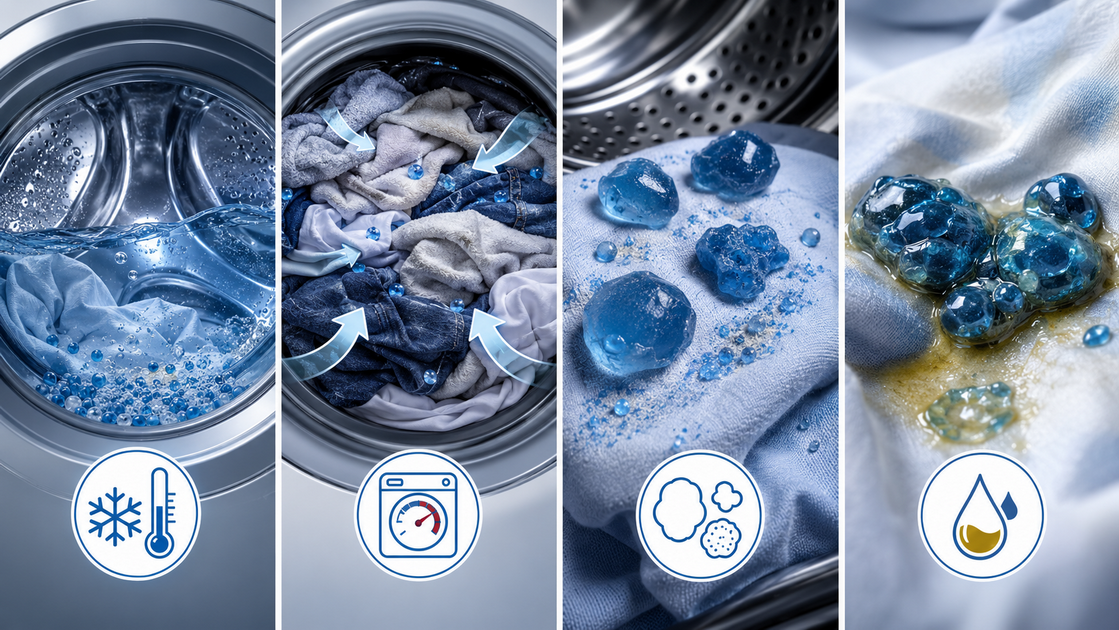
Many laundry fragrance beads rely on a water-soluble carrier matrix. If that matrix is not optimized for the wash environment, it may soften, clump, or remain partially intact.
Cold water, short cycles, low water volume, and limited mechanical agitation all make dissolution more difficult. This is why a formula that performs acceptably in a standard warm-water test may disappoint consumers who primarily use cold, quick, or eco cycles.
Major consumer-brand guidance commonly instructs users to add scent beads directly to the empty washer drum before clothing, rather than putting them into a dispenser. The intention is to give the product early access to water and agitation.
Fragrance is a critical product benefit, but it is also one of the most technically challenging ingredients in a scent bead formula. Fragrance oils are generally hydrophobic, while the bead needs to interact efficiently with water.
If fragrance loading is too high—or if the perfume is poorly matched to the bead base—the formula can become unstable. Potential effects include:
- Surface oil migration during storage
- Soft, sticky beads that agglomerate in the package
- Slow dispersion in cold water
- Oily spots on fabric
- Reduced visual clarity in the wash liquor
The solution is not simply to reduce fragrance. It is to develop a balanced fragrance-to-carrier ratio, select compatible raw materials, and verify stability through accelerated storage and wash testing.
Bead size is more than an aesthetic choice. It changes the surface area exposed to water.
Smaller, uniform particles generally provide more consistent exposure to water than oversized or highly irregular particles. If one batch contains a wide range of particle sizes, consumers may see inconsistent results: fine granules dissolve, but large pieces remain in the washer or become trapped in garments.
For OEM/ODM brands, particle-size specifications should be treated as a measurable quality-control requirement—not just a visual standard.
A strong formula can still underperform if production controls are weak. In large-scale manufacturing, consistent performance depends on precise management of:
- Raw-material quality and moisture
- Heating and cooling conditions
- Fragrance addition timing
- Mixing intensity and duration
- Granulation and particle-size distribution
- Drying performance
- Packaging seal integrity
This is especially important for global private-label projects. A formula may encounter different transport conditions, humidity levels, washing-machine types, and water temperatures in each target market.
At Foshan Magic Crystal Technology Development Co., Ltd., our production background—more than three self-owned factories, annual capacity of approximately 30,000–40,000 tons, and OEM/ODM experience serving over 300 brands—supports the kind of scalable process control brands need when moving from sample approval to commercial production.
Consumers often notice residue most clearly on dark textiles. A small amount of undissolved white carrier, a colorant-rich particle, or an incompatible additive can become highly visible after the wash.
A low-residue formula should be assessed not only in clear water. It should also be tested on representative fabrics, including:
- Black cotton T-shirts
- Dark polyester sportswear
- White cotton towels
- Denim
- Mixed-fiber bedding
- Delicate fabrics where spotting is highly noticeable
A product can look excellent in a beaker test yet fail under real laundering conditions. Fabric-level validation is the more meaningful standard.
Residue-resistant scent beads are engineered around realistic usage conditions rather than ideal laboratory conditions.
Laundry habits continue to shift toward lower-temperature, shorter, and more energy-conscious cycles. A robust formula should be evaluated in multiple conditions, not only a full warm cycle.
A practical OEM test matrix should include:
| Test condition | What it evaluates |
|---|---|
| Cold-water wash | Carrier solubility under the hardest common condition |
| Standard warm wash | Baseline fragrance release and dissolution |
| Quick wash | Performance with reduced contact time |
| HE machine | Low-water performance and dispersion |
| Full load | Ability to dissolve when water circulation is restricted |
| Dark-fabric wash | Visibility of particles, spotting, or color transfer |
| Rinse evaluation | Potential buildup after normal rinsing |
While brands may claim all-temperature performance, the safest approach is to validate the exact formula in the cycles that consumers will actually use. Downy and Arm & Hammer both state that their scent booster products are intended for use in washing-machine drums and are designed to dissolve in wash water, including in HE machines; brand-specific directions should always be followed.
Long-lasting fragrance does not require visible residue. Modern laundry systems may use fragrance microcapsules or other delivery technologies that are designed to deposit on textiles and release scent through friction after laundering.
The key is controlled deposition. Microcapsules should be sufficiently stable to survive the wash but appropriately engineered for textile affinity and fragrance release. Research and industry technical materials describe how capsule properties, deposition aids, and surface interactions can influence how perfume systems adhere to textiles.
For product developers, this means asking a more useful question than "Does it leave residue?":
Even the best laundry scent beads can be misused. Consumer education is a low-cost but high-impact way to reduce complaints.
Recommended on-pack directions:
1. Pour fragrance beads into the empty washing drum first.
2. Add laundry on top of the beads.
3. Use the recommended dosage for the load size.
4. Do not place beads in detergent or softener drawers unless the machine and product instructions specifically permit it.
5. Avoid overfilling the drum.
6. For very cold or very short cycles, follow the brand's tested-use guidance.
7. Keep the package tightly closed and store it in a cool, dry place.
Direct-to-drum use is consistently recommended by major scent-booster brands because it improves access to wash water before fabrics restrict circulation.
If a consumer reports residue, brands and customer-service teams can use this diagnostic sequence.
| Consumer symptom | Likely cause | Recommended next step |
|---|---|---|
| Whole beads remain in washer | Beads added too late, overloading, insufficient water exposure | Add beads to the empty drum before clothes; reduce load size |
| Gel-like fragments on clothing | Incomplete dissolution in cold or quick cycle | Try a longer cycle or adjust product dosage according to label |
| Oily marks or clumping in package | Formula instability, fragrance migration, or heat exposure | Review storage conditions; assess batch stability |
| Colored particles on dark clothes | Undissolved colored beads or dye-related issue | Check dissolution, particle size, and colorant compatibility |
| Repeated washer buildup concern | Overdosing, dispenser misuse, or pre-existing buildup | Follow dosing instructions and complete routine washer maintenance |
Brands should not automatically assume every complaint is user error. Repeated reports from different users, regions, or batches deserve formal investigation through retained samples, wash replication, packaging review, and raw-material traceability.
When sourcing laundry fragrance beads, focus on proof of performance rather than fragrance samples alone.
Ask potential suppliers:
- What carrier system is used, and how is cold-water dissolvability evaluated?
- What wash temperatures, cycle lengths, and machine types are included in testing?
- How is particle-size distribution controlled?
- What stability tests are used for fragrance migration, clumping, and storage?
- Are dark-fabric and white-fabric residue tests included?
- Can the fragrance intensity, bead color, dosage, and packaging be customized?
- What batch records and retained-sample procedures support complaint investigation?
- Can the supplier develop formulas for specific regional washing habits and climate conditions?
For an OEM/ODM launch, it is also wise to approve a golden sample, written product specification, visual limit standard, and pre-shipment inspection criteria. This converts subjective terms such as "dissolves well" into measurable expectations.

Laundry fragrance beads should enhance the wash experience—not create visible residue, rewash requests, or customer-service problems. The strongest products combine fast, reliable carrier dissolution, a stable fragrance system, controlled bead size, disciplined manufacturing, and clear consumer directions.
Foshan Magic Crystal Technology Development Co., Ltd. supports brands seeking customized laundry scent beads and adjacent home, personal-care, and pet-cleaning products. With self-owned manufacturing facilities, large-scale annual capacity, and experience supporting more than 300 global brands, we can help turn a fragrance concept into a performance-focused OEM/ODM product specification.
Contact our product-development team to discuss your target market, fragrance direction, desired bead appearance, wash conditions, packaging concept, and low-residue performance requirements.
Properly formulated and correctly used laundry fragrance beads are intended to dissolve during the wash. However, residue can occur when beads are poorly formulated, overdosed, placed in a dispenser, used in an overloaded machine, or washed in conditions that do not provide enough water, time, or agitation.
Cold water can slow the dissolution of some carrier systems, especially during quick cycles or in overloaded machines. Products intended for cold-water use should be specifically tested under cold-water, HE, and short-cycle conditions rather than evaluated only in warm water.
Usually, no. Major brand guidance recommends placing scent beads directly into the empty washer drum before adding garments. This helps the beads contact water early in the cycle and avoids poor dissolution in a compartment not designed for them.
Not necessarily. Some fragrance microcapsules are intentionally engineered to deposit on textiles so they can release scent after drying or when fabric is handled. The concern is visible, sticky, poorly rinsed, or objectionable material—not controlled, functional fragrance delivery.
Use a low-residue formula tested in realistic conditions, control bead size and fragrance compatibility, provide direct-to-drum dosage instructions, and investigate recurring complaints with retained samples and batch traceability.
Yes. OEM/ODM suppliers can typically customize fragrance, color, bead shape, dosage strength, package format, and target performance. The final formula should be tested against the washing conditions and consumer expectations of the intended market.
1. Manga, M. S., et al. "Deposition and Retention of Differently Shaped Micro-Particles on Textiles During Laundry Processing." *Journal of Surfactants and Detergents*, 2022. [Read the manuscript]. [eprints.whiterose.ac]
2. Downy. "Scent Beads for Beginners: What They Do and How to Use Them." [Read the guidance]. [downy]
3. Arm & Hammer. "How to Use Scent Boosters to Get Fresh Smelling Laundry." [Read the guidance]. [armandhammer]
4. U.S. Patent US4145184A. "Detergent Composition Containing Encapsulated Perfume." [Read the patent]. [patents.google]
5. Spray-Tek. "Laundry Microencapsulation for Fragrance Retention." [Read the technical overview]. [spray-tek]
6. Microcapsules Technologies. "Microencapsulation for Detergents and Softeners." [Read the technical overview]. [microcapsules-technologies]


